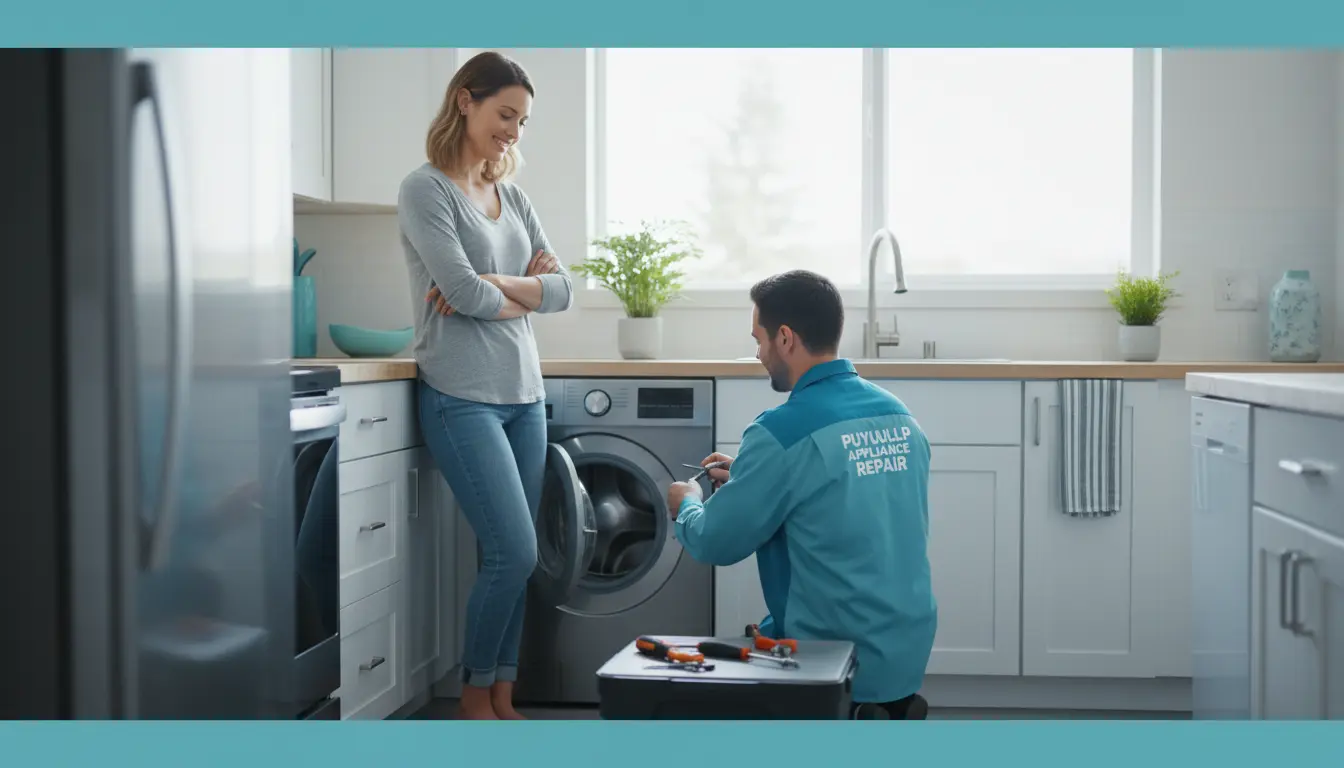
When a critical appliance stops working, the immediate question is whether to repair or replace it. The answer depends on diagnostic precision, the machine’s age, and the cost of OEM parts. In Puyallup, where many homes combine historic infrastructure with modern appliances, a professional assessment is essential to avoid costly mistakes. Understanding the repair-versus-replace decision framework can save hundreds of dollars and prevent unnecessary waste.
The Professional Diagnostics Workflow
Certified appliance technicians follow a systematic process that begins with a visual inspection and electrical safety check. The first step is to isolate the appliance from its power source and verify ground continuity with a digital multimeter. This ensures no stray voltage exists that could damage sensitive electronics or harm the technician. Next, the technician performs a series of load tests using a clamp-on ammeter to measure current draw during operation. Deviations from the manufacturer’s specifications indicate a failing motor, compressor, or heating element.
For sealed-system appliances like refrigerators and freezers, manifold gauges are connected to the service ports to measure high and low side pressures. The readings are compared to the pressure-temperature chart for the specific refrigerant. In Puyallup’s climate, where ambient temperatures can fluctuate from 30°F to 90°F, the saturated condensing temperature must be adjusted for seasonal variations. A technician also checks for thermal degradation of the compressor windings by measuring the resistance between the start, run, and common terminals. Values outside the OEM tolerance indicate imminent failure.
Electronic control boards are tested using a multimeter set to diode mode. Moisture ingress is a common issue in Puyallup, leading to corrosion on board traces. The technician inspects the board for visible signs of oxidation or burned components, then performs continuity verification on key circuits. If a board is salvageable, it may be cleaned and reflowed; otherwise, complete replacement is required. The final step is to recalibrate the appliance—running a diagnostic cycle to ensure all sensors, actuators, and relays operate within factory parameters.
Data Comparison: Professional Component-Level Repair vs. Complete Sub-Assembly Replacement
| Feature/Metric | Professional Component-Level Repair | Complete Sub-Assembly Replacement |
|---|---|---|
| Diagnostic Time | 45–90 minutes (includes component isolation) | 30–60 minutes (focus on module removal) |
| Part Longevity | Variable; depends on repair quality and remaining component life | Typically 5–10 years with OEM assembly |
| Structural Cost | $80–$250 (labor + small parts) | $300–$800 (assembly + labor) |
| Skill Level Required | Advanced (soldering, ohm testing, thermodynamic analysis) | Intermediate (plug-and-play, wiring harness) |
| Warranty Protection | Often 90 days on repair | 1–2 years on OEM assembly |
Source: NASTeC Core Appliance Service Reference Standard
Expert Insights from the Field
Three Advanced Diagnostic Tips
1. Check voltage drops at the terminal block. Many intermittent failures in dryers and ranges are caused by loose connections or corroded terminals. A voltage drop of more than 3% under load indicates a high-resistance connection that can overheat and cause a fire. Technicians use a multimeter to measure the voltage across the terminal block while the appliance is running. If the drop exceeds 5%, the terminal block and wiring must be replaced immediately.
2. Perform seasonal dryer vent maintenance. In Puyallup, where rain is frequent, dryer vents often accumulate moisture along with lint. This creates a perfect environment for mold and restricts airflow. A technician measures static pressure inside the vent with a manometer; readings above 0.3 inches of water column indicate a blockage. Cleaning the vent duct and verifying the outside flap opens freely can reduce drying time by 30% and prevent thermal overload on the heating element.
3. Test thermal fuses using resistance scales. A common mistake is to visually inspect a thermal fuse; they often appear intact but are internally open. The correct method is to set the multimeter to the resistance scale (ohms) and check for continuity. A reading of 0 ohms indicates the fuse is good; any infinite reading means it has blown. Always replace thermal fuses with the exact OEM part, as aftermarket substitutes may have different temperature ratings and cause further damage.
Common Mistakes Homeowners Make
1. Overloading laundry drums causing structural bearing failure. Many Puyallup homeowners try to maximize loads, especially during wet winter months. Overfilling the drum puts excessive lateral force on the drum bearings, leading to premature wear and eventually a loud grinding noise. The fix often requires replacing the entire drum assembly, an expensive repair that could have been avoided by following the manufacturer’s load capacity.
2. Using chemical drain cleaners in dishwashers. These harsh chemicals degrade the rubber seals on the drain pump and the spray arm gaskets. In Puyallup’s soft-to-moderate water, scale accumulation is less of an issue, so chemical cleaners are unnecessary. A better approach is to descale using a vinegar solution and manually clean the filter. The cost of a new drain pump seal is $20, but the labor to replace it can be $150.
3. Ignoring minor refrigerator clicking cycles. A clicking sound every few seconds often indicates a failing compressor relay or start capacitor. If left unchecked, the compressor can overheat and lock up, requiring a sealed system repair that costs $500–$800. Homeowners who hear occasional clicking should call a technician for a continuity verification test before the issue escalates.
Pricing Structure for Appliance Repair in Puyallup
- Standard diagnostic trip fee: $75–$125. This covers the technician’s time to reach your home, perform the initial inspection, and provide a written estimate. The fee is often waived if you proceed with the repair.
- Tiered repair rates based on appliance complexity: Simple repairs like replacing a refrigerator door gasket or a dishwasher spray arm cost $100–$200. Mid-level repairs such as replacing a washing machine motor or oven heating element run $200–$400. Complex sealed system repairs or control board replacements range from $400–$1,200.
- Flat-rate structural pricing: Some tasks, like replacing a dryer drum belt or a dishwasher water inlet valve, are quoted at a fixed price to avoid surprises. For example, a dryer belt replacement is typically $150–$200 inclusive of parts and labor.
Three factors that influence cost: premium luxury brand OEM parts sourcing — brands like Sub-Zero, Wolf, and Viking require proprietary components that are more expensive and harder to source; advanced electronic control module flashing requirements — some modern appliances need software updates that can only be done with manufacturer-specific diagnostic tools; and physical accessibility of custom built-in residential kitchen layouts — built-in refrigerators or dishwashers in tight cabinetry can add 30–60 minutes to labor time.
Safety and Standards Compliance
Every professional repair in Puyallup should adhere to strict safety standards. Technicians must hold EPA Section 608 certification to handle refrigerants lawfully. This ensures that sealed system repairs are performed without releasing harmful gases into the atmosphere. NASTeC certification validates that the technician has passed rigorous exams on appliance theory and diagnostics. Additionally, OSHA electrical safety standards require technicians to lock out and tag out power sources before servicing any appliance.
Using factory-authorized OEM replacement parts is critical for maintaining warranty compliance and ensuring the appliance operates as designed. Non-OEM parts often have slightly different tolerances, leading to premature failure or even fire hazards. For example, a generic heating element for a dryer may not have the correct thermal cutoff ratings, causing the element to overheat and ignite lint. Local technicians in Puyallup always source OEM parts from authorized distributors, guaranteeing the repair meets the manufacturer’s specifications.
Frequently Asked Questions About Appliance Repair
How long does a typical appliance repair take in Puyallup?
A standard repair, such as replacing a refrigerator start relay or a dishwasher drain pump, usually takes 1 to 2 hours including diagnosis and labor. More complex repairs, like sealed system work on a refrigerator or replacing a washing machine control board, can take 2 to 4 hours. The technician will provide a time estimate during the diagnostic visit. Keep in mind that if the part needs to be ordered, the repair may be scheduled for a later date.
What is the 50% rule for deciding to repair or replace?
Many industry professionals recommend that if the repair cost exceeds 50% of the price of a new appliance, replacement is usually the better investment. However, this rule needs to be adjusted for high-end appliances. For example, repairing a $6,000 refrigerator for $3,000 is often worth it because the replacement would cost much more. Conversely, fixing a $500 washing machine for $300 may not be economical. A technician can provide a cost-benefit analysis based on the specific model and its remaining life expectancy.
Can I attempt to repair my own appliance to save money?
While some simple tasks like cleaning a dishwasher filter or replacing a refrigerator water filter are safe DIY projects, complex repairs involving electrical components, sealed systems, or gas lines should be left to professionals. Improper handling can lead to electric shock, gas leaks, or damage to the appliance. In Puyallup, many homeowners have attempted DIY repairs only to cause further damage, resulting in higher overall costs. Always consult a certified technician for anything beyond basic maintenance.
How does Puyallup’s humid climate affect appliance longevity?
Humidity accelerates corrosion on electrical contacts, circuit boards, and metal components. In refrigerators, moisture can cause the defrost system to fail more frequently. In dryers, high humidity can reduce drying efficiency and increase the risk of lint buildup. Homeowners can mitigate these effects by ensuring proper ventilation, using dehumidifiers in laundry rooms, and scheduling regular maintenance checks. For more details, see our regular maintenance tips for Puyallup homes.
What should I do if my appliance is still under warranty?
If your appliance is under the manufacturer’s warranty, contact the manufacturer or an authorized service provider first. Attempting a repair yourself or using an unauthorized technician can void the warranty. Many warranties require the use of OEM parts and certified technicians. In Puyallup, we can help verify warranty coverage and coordinate with the manufacturer to ensure the repair is covered.
Professional Appliance Care in Puyallup
Maintaining the efficiency and longevity of your home’s electromechanical systems requires a proactive approach. Regular inspections, timely repairs, and adherence to safety standards are the foundation of a reliable home. In Puyallup, where moisture and temperature variations challenge even the best appliances, partnering with a certified service provider is the smartest way to protect your investment.
Whether you need a washing machine motor replaced, a refrigerator sealed system repaired, or a dishwasher control board diagnosed, professional technicians have the tools and expertise to do the job right. By relying on OEM parts, following NASTeC guidelines, and understanding local conditions, they ensure your appliances run safely and efficiently for years to come. For any appliance issue, trust the experts who know Puyallup’s unique environment.