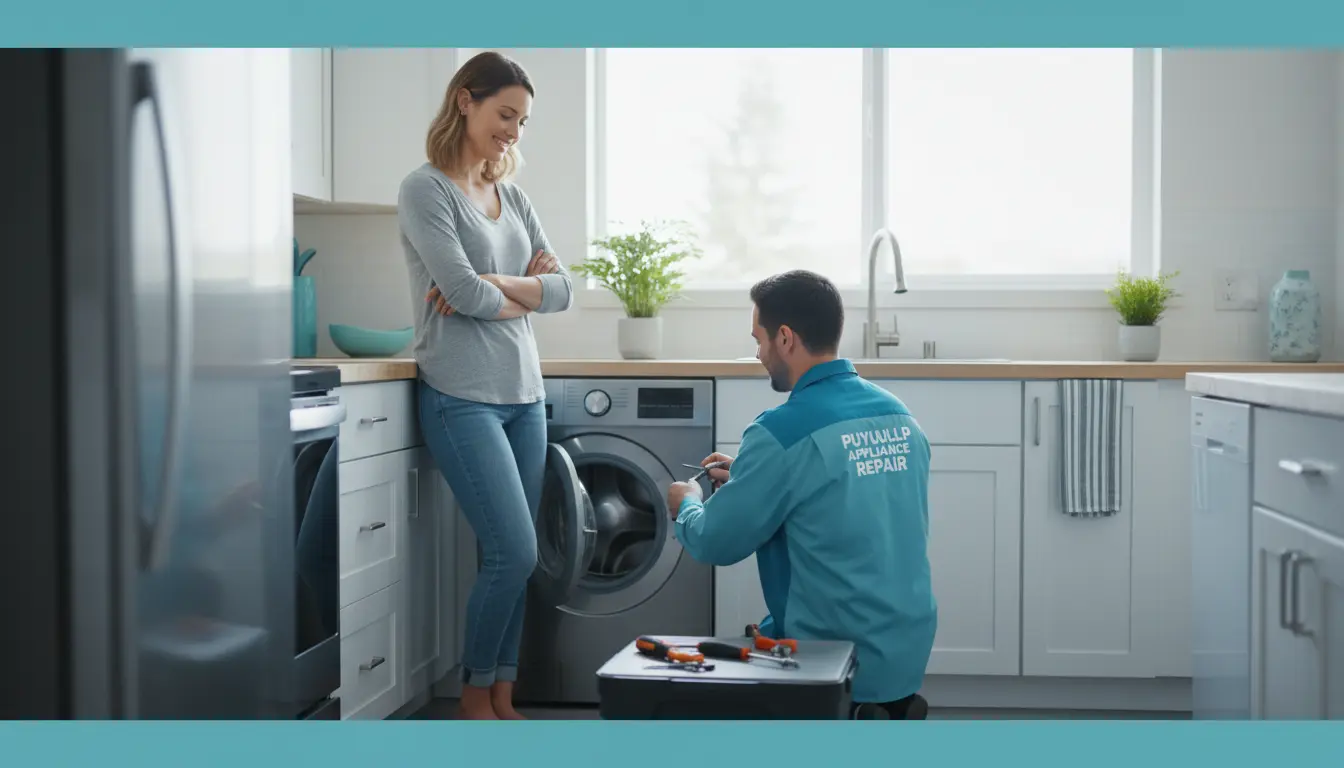
Appliance repair for rental properties and landlords in Puyallup is a specialized service distinct from standard residential appliance maintenance. While a homeowner may decide to fix a broken refrigerator based on personal convenience, a landlord must consider tenant satisfaction, lease compliance, and long-term asset depreciation. The primary difference lies in the owner-occupant dynamic: the landlord owns the appliance but does not use it daily, while the tenant relies on it without bearing the cost of replacement or repair. In Puyallup, this distinction is amplified by the region’s persistent Pacific Northwest moisture, which accelerates corrosion on electronic control boards, and the area’s soft-to-moderate water profile that silently scales heating elements over time.
Professional appliance repair for rental properties requires a systematic approach that minimizes downtime and ensures the appliance operates within factory specifications. Unlike a simple swap of a broken part, a certified technician performs a full diagnostic to uncover underlying issues such as thermal degradation of insulation or micro-cracks in closed-loop refrigeration circuits. This is not the same as a quick fix; it is a precision service that protects the landlord’s investment and keeps tenants comfortable. For Puyallup landlords, understanding this nuance is the first step toward reducing vacancy rates and avoiding emergency calls that disrupt rental income.
Technical Process for Rental Property Appliance Diagnostics
Every professional repair begins with a preliminary multi-meter inspection to verify voltage at the outlet and check for loose connections inside the appliance junction box. Using a digital multi-meter (DMM) set to AC voltage, the technician measures the line voltage under load, looking for drops below 110 volts that indicate wiring issues in the rental unit itself. This step is critical because old Puyallup homes built before 1980 often have aluminum branch circuits that degrade over time, causing intermittent power loss that damages compressor relays and electronic control boards.
Next, the technician performs continuity verification on safety components such as thermal fuses and door switches. A clamp-on ammeter measures current draw during operation—a refrigerator compressor should pull between 0.5 and 2.0 amps depending on size. Readings outside this range suggest a locked rotor or failing run capacitor, which is common in the humid Puyallup climate where condensation corrodes terminal connections. The technician then isolates the faulty component, often using a specialized diagnostic software interface for modern smart appliances that store error codes in non-volatile memory.
After component replacement, operational calibration ensures the appliance cycles correctly. For a dishwasher, this means checking the fill valve opens precisely for 2–3 seconds to deliver correct water volume, and the heating element reaches 140°F during the dry cycle. A descaling calibration may be performed if mineral buildup is detected—common in Puyallup’s water which has moderate hardness levels around 120–150 ppm. The final step is a full run-through test to confirm all functions work under load, providing the landlord with a documented report of the repair.
Data Comparison: Component-Level Repair vs. Complete Sub-Assembly Replacement
Landlords often face a choice between repairing a specific component (e.g., replacing a start relay) or swapping an entire sub-assembly (e.g., the compressor module). The following table compares key metrics for rental property applications in Puyallup.
| Feature/Metric | Professional Component-Level Repair | Complete Sub-Assembly Replacement |
|---|---|---|
| Diagnostic Time | 45–60 minutes (includes component isolation) | 30–45 minutes (faulty assembly identified faster) |
| Part Longevity | 3–5 years (original surrounding parts may still degrade) | 5–8 years (all components in assembly are new) |
| Structural Cost | $120–$250 (lower upfront, but may need another repair sooner) | $350–$700 (higher upfront, but reduced future failures) |
| Tenant Disruption | 1–2 hours (focused repair) | 2–4 hours (requires removing entire assembly) |
| Warranty Coverage | 90 days on replaced part | 1–2 years on full assembly |
Source: NASTeC Core Appliance Service Reference Standard
For Puyallup landlords managing older rental units, component-level repair often makes sense for appliances under 8 years old. Newer homes with built-in cabinets may justify sub-assembly replacement to avoid repeated service calls. A qualified technician can evaluate the total cost of ownership and recommend the most economical path.
Expert Insights for Landlords
Three Advanced Diagnostic Tips
First, always check voltage drops at the terminal block of the appliance, not just at the wall outlet. A 5% drop under load indicates a bad connection in the circuit, which can cause intermittent failures that confuse tenants. In Puyallup, older breaker panels with aluminum wiring often show this issue, leading to premature compressor burnout. Second, perform seasonal dryer vent maintenance before the rainy season. The high humidity causes lint to clump and restrict airflow, raising internal temperatures beyond the thermal fuse rating of 240°F. A clogged vent can increase drying time by 50% and create a fire hazard. Third, test thermal fuses using the resistance scale on a DMM. A reading above 0.5 ohms indicates the fuse is open and must be replaced—never bypass it, as that voids safety certification.
Common Landlord Mistakes
Overloading washing machine drums to get more loads done per tenant cycle is a frequent error. This causes structural bearing failure, leading to loud noises and eventual drum wobble that requires a $300–$500 repair. Another mistake is using chemical drain cleaners in dishwashers. The harsh chemicals destroy internal rubber seals and gaskets, causing leaks that damage laminate countertops. In Puyallup, where many rentals have tile countertops, a leak can seep into grout and cause mold growth. Finally, ignoring a refrigerator’s soft clicking cycle that repeats every few minutes often indicates a compressor relay that is burning out. If left unattended, the relay can weld shut, locking the compressor and requiring a full sealed system replacement costing $800–$1,200.
Pricing Structure for Rental Property Repairs
- Standard diagnostic trip fee: $75–$95, which covers initial inspection and identification of the faulty component. This fee is applied to the repair cost if approved.
- Tiered repair rates: $50–$80 per 30 minutes for basic repairs (e.g., thermostat replacement), $90–$120 per hour for complex sealed system work involving refrigerant handling.
- Flat-rate structural pricing: $250–$400 for specific tasks like heating element replacement in electric ovens, or $500–$800 for compressor replacement with vacuum and recharge.
Three factors that influence cost for Puyallup landlords include: premium luxury brand OEM parts sourcing (e.g., Sub-Zero or Viking) which can double part costs; advanced electronic control module flashing requirements that require proprietary software and increase labor; and physical accessibility of custom built-in kitchen layouts, which may require removing countertops or cabinetry to access appliances, adding 1–2 hours of labor.
Safety Standards and Certifications
All technicians servicing rental properties in Puyallup must hold EPA Section 608 certification for handling refrigerants. This ensures compliance with federal clean air regulations and prevents the release of harmful gases that deplete the ozone layer. Additionally, NASTeC certification verifies that the technician has passed a rigorous exam on diagnostic procedures and safety protocols. Electrical safety grounding protocols are followed using OSHA guidelines—every appliance is tested for proper grounding with a ground-fault circuit interrupter (GFCI) when required by code. Using factory-authorized OEM replacement parts is not optional; aftermarket parts may not meet the original specifications for thermal resistance or electrical load, leading to premature failure or fire hazard. In Puyallup, where many rentals have older wiring, using OEM parts with correct insulation ratings is critical to prevent high-voltage short circuits. Dryer vent cleaning is also performed according to NFPA 211 standards to eliminate fire hazards from lint accumulation.
Frequently Asked Questions
How often should I have rental property appliances serviced?
Ideally, schedule a preventive maintenance check annually for major appliances like refrigerators, dishwashers, and dryers. In Puyallup’s humid climate, the condenser coils on refrigerators should be cleaned every 6 months to maintain proper heat exchange. For dishwashers, a descaling calibration every 12 months prevents mineral buildup that clogs the spray arms and damages the heating element. This proactive approach reduces emergency repair costs and extends appliance life by 2–3 years.
Can I do a simple DIY fix before calling a professional?
Landlords can safely perform tasks like cleaning the refrigerator condenser, replacing a dryer vent hose, or unclogging a dishwasher drain. However, any repair involving electrical connections, refrigerant lines, or gas fittings should be left to a certified technician. Attempting to replace a compressor relay without verifying voltage drops can cause a short circuit that damages the control board, leading to a more expensive repair. Always refer to the appliance manual and local building codes.
What are the signs that a tenant is misusing an appliance?
Unusual noises, such as grinding or thumping, often indicate overloading or improper leveling. A dryer that takes longer than 60 minutes to dry a load may have a clogged vent due to excessive lint from the tenant’s usage. Refrigerator ice buildup on the freezer floor suggests the door was left open repeatedly. Educate tenants with a simple check-in checklist during lease signing to reduce misuse.
How do I decide between repair and replacement for a rental property appliance?
Use the 50% rule: if the repair cost exceeds 50% of the price of a new comparable appliance, replacement is usually more economical. Also consider the appliance age—units over 10 years old with multiple failures should be replaced. In Puyallup, where new energy-efficient appliances can save 15–20% on utility costs, replacing an old refrigerator often pays for itself within 3 years through lower electricity bills.
Professional Appliance Care in Puyallup
Maintaining highly efficient electromechanical systems in rental properties requires a partner who understands the unique demands of Puyallup’s climate and housing stock. From thermal degradation in insulation to scale accumulation on heating elements, local conditions demand precision diagnostics and factory-authorized repairs. By investing in professional appliance repair for rental properties and landlords in Puyallup, property owners protect their assets, retain reliable tenants, and avoid costly emergency calls. Southhillvsmajorappliancerepair.com offers certified technicians who follow NASTeC guidelines and use OEM parts for every repair. Schedule a diagnostic today to keep your rental units running smoothly year-round.