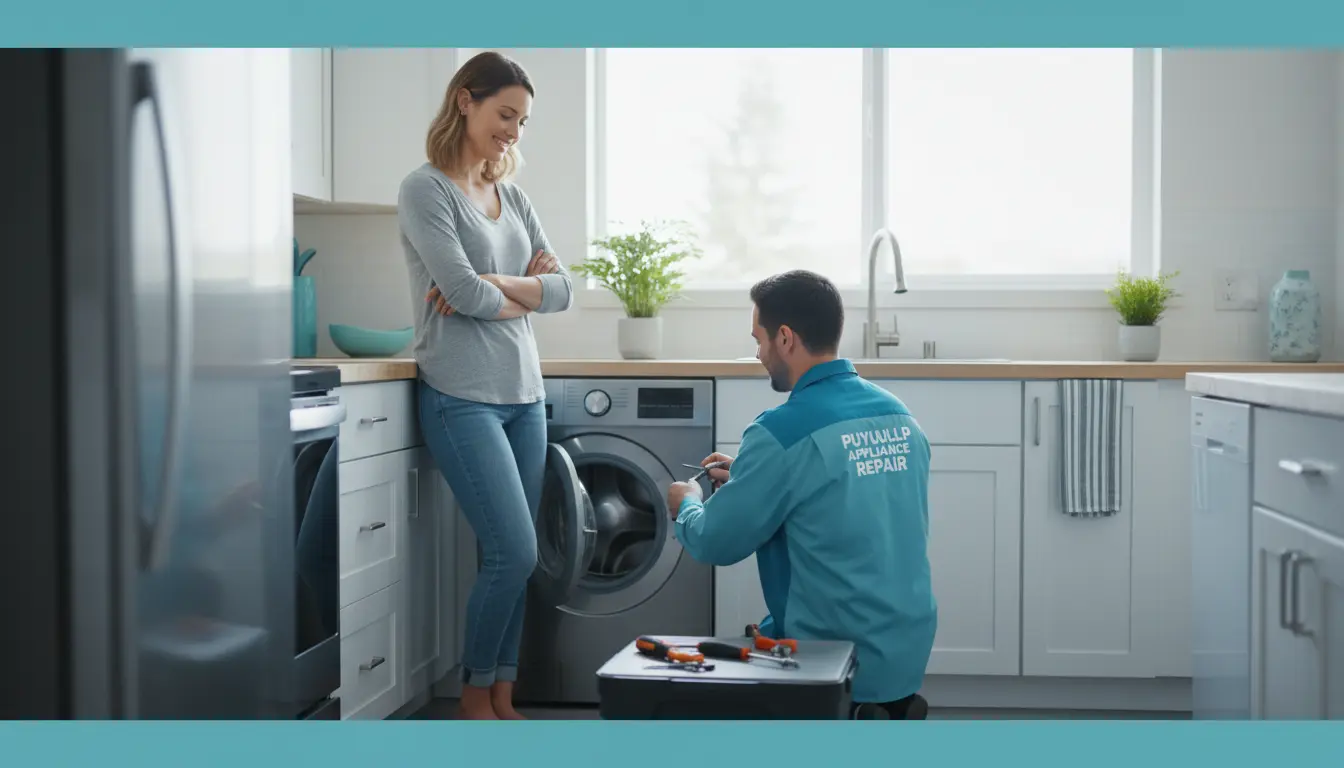
Every week, homeowners in Puyallup face the same costly gamble: a refrigerator stops cooling, a dishwasher leaks onto a hardwood floor, or a washing machine spins erratically. The immediate reaction is often to pull out a phone, type “appliance repair near me” into a search engine, and call the first number that appears. That impulsive choice can lead to a $150 diagnostic fee for a technician who misreads a control board error code, orders the wrong part, and leaves the appliance in worse condition than when they arrived. The real price isn’t just the wasted service call—it’s the spoiled groceries, the water damage to subflooring, and the weeks of lost laundry service while you wait for a second, competent technician to undo the first repair.
Puyallup’s climate amplifies these risks. Persistent Pacific Northwest moisture seeps into electronic housing seals, accelerating corrosion on circuit boards and relay contacts. The region’s soft-to-moderate water profile still leaves scale accumulation on heating elements inside dishwashers and water heaters, silently degrading thermal transfer efficiency. Seasonal temperature fluctuations force refrigeration systems into extended duty cycles, straining compressors and condenser fans. Without a repair partner who understands these local variables, every DIY fix or unvetted contractor visit becomes a gamble with your home’s most essential mechanical systems. This guide provides a systematic method to find dependable “appliance repair near me” services in Puyallup, grounded in technical knowledge and local expertise.
What Separates a Dependable Appliance Repair Service from the Rest
Dependability in appliance repair begins long before a technician arrives at your door. It starts with the company’s commitment to ongoing training, access to OEM (Original Equipment Manufacturer) parts, and a diagnostic philosophy that prioritizes root-cause analysis over component swapping. A reputable service in Puyallup employs technicians who hold certifications such as EPA Section 608 for refrigerant handling or NASTeC (National Appliance Service Technician Certification) credentials. These certifications prove the technician has passed rigorous exams on electrical theory, sealed system mechanics, and safety protocols.
Another critical marker is the service’s local reputation. A company that has operated in Puyallup for several years has likely encountered the specific failure patterns common to this area. For example, they know that the high humidity around the Puyallup River valley accelerates corrosion on the defrost thermistor connectors in many refrigerator models. They also understand that the local water supply’s moderate hardness leads to scale accumulation inside dishwasher heating elements, which requires descaling calibration rather than simply replacing the entire assembly. When a technician arrives with this contextual knowledge, the diagnostic process becomes faster and more accurate.
The Professional Appliance Diagnostics and Repair Workflow
A competent appliance repair technician follows a structured diagnostic workflow that isolates the failure to a specific component or subsystem. This process minimizes guesswork and ensures that the repair addresses the root cause, not just the symptom. For a refrigerator that is not cooling, for instance, the technician will start with electrical checks at the wall outlet to confirm proper voltage and grounding. They then move to the control board, using a digital multi-meter to verify that the main relay is sending power to the compressor start circuit.
Step 1: Preliminary Electrical and Mechanical Inspection
The technician begins by disconnecting power and performing a visual inspection of the appliance. They check for obvious signs of physical damage, such as cracked wiring insulation, burned terminals, or fluid leaks. For a washing machine that won’t drain, they might remove the front access panel to inspect the drain pump for debris or a seized impeller. This initial visual scan often reveals simple issues like a clogged filter or a broken belt, which can be resolved without deep electrical diagnostics.
Step 2: Multi-Meter Testing and Continuity Verification
After the visual check, the technician uses a digital multi-meter to test individual components. For a dryer that doesn’t heat, they will check the thermal fuse, high-limit thermostat, and heating element for continuity. A good thermal fuse should show near-zero resistance; an open circuit indicates a blown fuse, often caused by restricted airflow from a clogged vent. The technician will also measure voltage at the terminal block to ensure the heating element is receiving 240 volts. This step-by-step continuity verification eliminates the need to replace parts randomly.
Step 3: Electronic Control Board Diagnostics
Modern appliances rely on electronic control boards that manage everything from compressor cycles to door lock sequences. A technician uses specialized diagnostic software or a multimeter with a duty cycle function to check for error codes and sensor readings. For example, on a refrigerator, they might test the thermistor resistance to confirm it matches the expected temperature curve. If the thermistor reads out of specification, the control board may receive false temperature data and run the compressor continuously, leading to thermal degradation of the compressor windings. Replacing the thermistor restores proper cycling and extends the compressor’s life.
Step 4: Sealed System Evaluation (for Refrigerators and Freezers)
If the refrigerator’s evaporator coils show frost buildup or the compressor runs but the unit doesn’t cool, the technician must evaluate the sealed system. This involves connecting manifold gauges to the service ports to measure suction and discharge pressures. A low suction pressure combined with a high discharge pressure indicates a restricted metering device or a partial blockage in the capillary tube. The technician may also perform a vacuum pull and weigh in the correct refrigerant charge. This work requires EPA Section 608 certification and specialized tools like a refrigerant scale and a micron gauge.
Step 5: Operational Calibration and Final Testing
After replacing the faulty component, the technician reassembles the appliance and runs it through a complete cycle. They monitor temperatures, listen for abnormal noises, and verify that all functions operate correctly. For a dishwasher, this means running a full wash cycle while checking for leaks, verifying water temperature, and confirming that the drain pump evacuates water completely. This final calibration step ensures that the repair has restored the appliance to factory performance specifications.
In practice, the choice depends on the technician’s skill and the availability of parts. A factory-authorized service that stocks OEM sub-assemblies may recommend replacement for speed and reliability. A technician with advanced micro-soldering training might offer component-level repair for older appliances where the sub-assembly is discontinued or cost-prohibitive. For Puyallup homeowners, asking whether the technician can perform component-level repairs can save money on out-of-warranty repairs for high-end brands like Sub-Zero or Miele.
Expert Diagnostic Tips for Puyallup Homeowners
The following three professional tips address common failure modes in this region. Applying them can prevent unnecessary service calls and extend appliance life.
Tip 1: Check Voltage Drop at the Terminal Block
Many Puyallup homes built in the 1970s and 1980s still have original electrical panels. Over time, connections can loosen, causing voltage drop under load. When a dryer takes too long to heat or a refrigerator compressor hums but won’t start, measure voltage at the appliance’s terminal block while it is running. If the voltage drops below 108 volts for a 120-volt appliance or below 216 volts for a 240-volt appliance, the problem may be upstream in the home’s wiring, not in the appliance itself. A technician who checks this can save you from replacing a perfectly good heating element or compressor.
Tip 2: Perform Seasonal Dryer Vent Maintenance
Puyallup’s fall and winter months bring increased humidity and more frequent drying cycles. Lint accumulation in the vent hose reduces airflow, causing the thermal fuse to blow. Before the wet season starts, disconnect the dryer from the vent and run a shop vacuum through the duct. Also, clean the lint trap after every load. This simple maintenance prevents the high-limit thermostat from cycling repeatedly, which can lead to thermal degradation of the heating element and eventual failure.
Tip 3: Test the Thermal Fuse with a Multi-Meter
When a dryer stops heating entirely, the thermal fuse is the first component to test. Set your multi-meter to the resistance (ohms) scale. Disconnect power and remove the fuse—usually located on the blower housing or exhaust duct. Touch the probes to the fuse terminals. A reading of zero or near-zero ohms indicates the fuse is good. An infinite reading (open circuit) means the fuse is blown. If the fuse is blown, do not simply replace it. The underlying cause—usually a clogged vent—must be addressed, or the new fuse will blow within a few cycles.
Common Mistakes Puyallup Homeowners Make with Appliance Repair
Mistake 1: Overloading the Washing Machine Drum
Stuffing a front-load washer with bulky comforters or multiple towels places excessive stress on the drum bearings and suspension springs. Over time, this leads to structural bearing failure, causing the drum to wobble loudly or seize entirely. A replacement bearing job costs $300 to $500 and often requires disassembling the entire washer. To avoid this, never fill the drum beyond three-quarters full, and always redistribute heavy items evenly around the drum.
Mistake 2: Using Chemical Drain Cleaners in Dishwashers
When a dishwasher drains slowly, many homeowners pour a liquid drain cleaner containing sodium hydroxide or sulfuric acid into the sump. These chemicals attack the rubber seals on the drain pump impeller and the door gasket. Within weeks, the seals degrade, causing leaks that can damage the kitchen floor and subflooring. Instead, remove the drain filter and inspect for food debris or a broken glass shard. If the drain pump is clogged, disassemble it manually—no chemicals required.
Mistake 3: Ignoring a Refrigerator’s Clicking Cycle
A refrigerator that clicks every few seconds but never starts cooling is often suffering from a failing start relay or overload protector. Ignoring this symptom allows the compressor to heat up without running, potentially causing a locked rotor. Once the compressor seizes, the repair escalates from a $40 relay replacement to a $600 sealed system overhaul. When you hear repetitive clicking, unplug the refrigerator and call a technician who can Ohm-test the compressor windings and replace the relay if needed.
Understanding Appliance Repair Pricing in Puyallup
Pricing for appliance repair services in Puyallup follows a predictable structure, but understanding the components helps you avoid surprises.
- Standard diagnostic trip fee: $75–$125. This covers the technician’s time to travel to your home and perform the initial inspection and electrical tests. Most reputable services apply this fee toward the repair cost if you approve the work.
- Tiered repair rates based on appliance complexity: Simple repairs like replacing a refrigerator door gasket run $100–$200. Intermediate repairs involving electronic control boards (e.g., a washing machine that won’t spin) range from $200–$400. Complex sealed system repairs (e.g., replacing a refrigerator compressor) cost $400–$800 due to the specialized tools and refrigerant handling required.
- Premium luxury brand parts sourcing: If you own a Sub-Zero, Wolf, Miele, or other high-end brand, OEM parts can cost 50–100% more than standard brands. A control board for a standard refrigerator might be $150, while a board for a Sub-Zero could be $400. Always ask whether the service uses OEM parts or aftermarket alternatives, as aftermarket parts may void the manufacturer warranty.
Safety Standards and Certifications That Protect Your Home
EPA Section 608 Certification: Any technician who works on refrigerators, freezers, or air conditioners must hold this certification. It covers proper refrigerant recovery, recycling, and handling procedures. Without it, a technician could vent refrigerant into the atmosphere, which is illegal and harmful to the environment. It also means they know how to safely braze copper lines without introducing moisture into the sealed system.
OSHA Electrical Safety Standards: A professional service follows OSHA guidelines for lockout/tagout procedures, ensuring the appliance is completely disconnected from power before any component is touched. They also use insulated tools and wear personal protective equipment when working near live circuits. This prevents electrical shocks and arc flashes that could injure the technician or damage your home’s wiring.
Factory-Authorized Parts: Using OEM parts ensures the replacement component meets the manufacturer’s specifications for electrical resistance, thermal tolerance, and physical dimensions. Aftermarket parts may be cheaper, but they can cause imbalanced loads on the control board, leading to premature failure of other components. Always ask for an itemized invoice listing the OEM part numbers.
Frequently Asked Questions About Appliance Repair in Puyallup
How long does a typical appliance repair visit take?
For a straightforward repair like replacing a refrigerator door gasket or a dryer thermal fuse, the technician may complete the work in 45 to 90 minutes. More complex diagnostics, such as a sealed system leak on a built-in refrigerator, can take two to three hours. If the technician needs to order a non-stocked part, they will schedule a follow-up visit. Always ask for an estimated time frame when scheduling the initial appointment, and confirm whether the service stocks common OEM parts for your appliance brand.
Can I trust a repair service that offers a flat-rate price over the phone?
A flat-rate price over the phone is rarely accurate unless the technician has already diagnosed the problem. Reputable services provide a diagnostic fee and then give a written estimate after the technician sees the appliance. Be skeptical of any company that quotes a fixed price for a “refrigerator repair” without knowing the model, symptoms, or whether the issue is electrical or mechanical. This practice often leads to hidden charges once work begins.
What should I do if the repair fails shortly after the service visit?
Most reputable services offer a 30- to 90-day warranty on parts and labor. If the same issue recurs within that period, call the service and request a return visit. The technician should re-diagnose the problem at no additional charge. If a different component fails, the warranty may not cover it, but the service should explain the new diagnosis thoroughly. Keep your original invoice and note the serial numbers of any replaced parts to support your claim.
How can I tell if a repair is worth the cost versus buying a new appliance?
A general rule of thumb: if the repair cost exceeds 50% of the price of a new comparable model, replacement is often more economical. For a refrigerator that is more than 10 years old, a compressor failure costing $600 may not be justified when a new energy-efficient model sells for $1,200. However, for built-in or high-end brands, repair may be the only option due to custom dimensions or replacement costs exceeding $5,000. A trustworthy technician will give you an honest assessment of the appliance’s remaining life and the cost-benefit of repair versus replacement.
Final Thoughts on Finding Dependable Appliance Repair in Puyallup
Choosing the right appliance repair service in Puyallup requires more than a quick online search. It demands an understanding of local climate factors, technical diagnostic processes, and the professional standards that separate competent work from costly mistakes. By following the framework outlined here—verifying certifications, asking about diagnostic workflow, understanding pricing structures, and recognizing common failure patterns—you can confidently select a service that will restore your appliances efficiently and safely.
Puyallup Appliance Repair brings decades of combined field experience to every call. Our technicians hold EPA Section 608 and NASTeC certifications, use OEM parts exclusively, and follow a rigorous diagnostic workflow that isolates the exact failure point. Whether your refrigerator is cycling too often, your dishwasher is leaving residue, or your dryer has stopped heating, we have the tools and knowledge to fix it right the first time. We serve every neighborhood in Puyallup, from downtown to the South Hill area, and we understand the unique demands of Pacific Northwest homes.
Do not let a failing appliance disrupt your daily routine or risk secondary damage to your home. Contact Puyallup Appliance Repair today to schedule a diagnostic visit, and experience the difference that professional, local expertise makes. Your appliances—and your peace of mind—deserve nothing less.