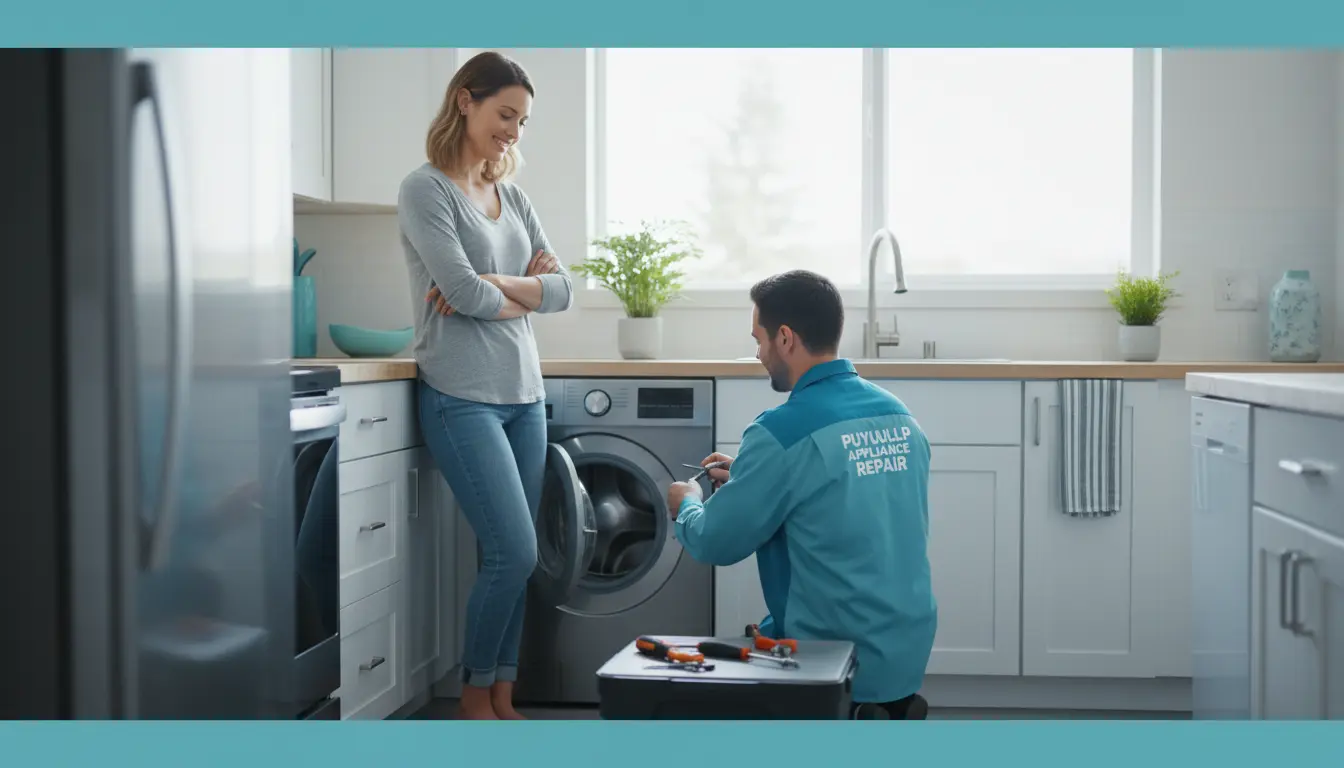
Efficient kitchen appliance operation is not merely about lower utility bills or quieter cycles; it is the sustained, calibrated performance of electromechanical systems under the specific environmental stresses of a Puyallup home. Many homeowners confuse routine cleaning with true efficiency maintenance, but the two are distinct. Cleaning removes surface debris, while efficiency maintenance involves verifying electrical continuity, refrigerant pressures, and mechanical timing—work that requires a multimeter and a trained eye, not just a sponge. In Puyallup’s damp Pacific Northwest climate, where moisture infiltrates electronic housings and soft water accelerates scale accumulation in heating elements, the line between a well-running appliance and a failing one is thin. Understanding this difference is the first step toward preserving your investment and avoiding the disruptions that come with unexpected breakdowns.
Professional factory-certified service becomes essential when local conditions combine with everyday wear. The persistent humidity in Puyallup, especially during the rainy season, can cause corrosion on control board traces and relay contacts, leading to intermittent failures that are hard to diagnose without proper tools. Additionally, the region’s moderate water hardness—though not extreme—still deposits lime scale inside dishwasher heaters and washing machine fill valves over time, silently reducing efficiency until a component fails. This is why the approach to keeping kitchen appliances running efficiently year-round must go beyond DIY wipe-downs; it requires a systematic diagnostic regimen that addresses both the appliance’s internal mechanics and the external environment. Puyallup Appliance Repair specializes in this precision work, combining local knowledge with certified technical expertise to keep your kitchen running at peak performance.
The Professional Diagnostic Workflow: Step-by-Step
When a technician from Puyallup Appliance Repair arrives at your home, the process begins with a visual inspection and a thorough interview about the appliance’s recent behavior. This initial step is critical because it often reveals patterns—such as a refrigerator that runs longer after humid nights or a dishwasher that leaves spots only during winter—that point to moisture-related issues or seasonal temperature shifts. The technician then proceeds to a systematic electrical evaluation using a digital multimeter set to measure resistance, voltage, and continuity. For example, checking the compressor’s start relay on a refrigerator involves measuring the resistance across the run and start windings, which should fall within the manufacturer’s specified range for that model. A deviation of more than 5 percent typically indicates a failing component that will soon cause a no-cool condition.
Next, the technician moves to electronic control board diagnostics. In Puyallup’s humid environment, boards often develop micro-cracks in solder joints or corrosion on connector pins. Using a specialized diagnostic interface, the technician can read error codes stored in the board’s memory and perform a live data stream analysis to check sensor inputs like thermistors and door switches. This is followed by continuity verification of all safety circuits—thermal fuses, door interlocks, and pressure switches—using an ohmmeter. A closed-circuit reading confirms the path is intact, while an open circuit indicates a blown safety device that must be replaced before the appliance will operate. The final step in the technical process is component isolation: the technician systematically disconnects each major sub-assembly (compressor, heating element, drain pump) and tests it independently to isolate the faulty part. For systems that involve fluid flow, such as dishwashers and washing machines, the technician will also perform a system flush to remove scale accumulation and sediment, followed by a descaling calibration of the heating element to restore its original wattage output.
Component-Level Repair vs. Sub-Assembly Replacement: A Data-Driven Comparison
When a major appliance fails, homeowners are often faced with two repair strategies: replacing only the failed component (e.g., a relay, a thermistor, or a seal) or replacing the entire sub-assembly (e.g., the main control board, the compressor module, or the entire wash motor assembly). Each approach has distinct trade-offs in terms of diagnostic time, part longevity, and structural cost. The table below summarizes these differences based on industry benchmarks from the NASTeC Core Appliance Service Reference Standard.
| Feature/Metric | Professional Component-Level Repair | Complete Sub-Assembly Replacement |
|---|---|---|
| Diagnostic Time | 30–45 minutes for precise isolation | 10–15 minutes for board/module swap |
| Part Longevity | High (if original OEM part is used) | High (new assembly carries full warranty) |
| Structural Cost | Lower (only the failed component) | Higher (entire assembly cost) |
| Labor Complexity | Moderate to high (requires soldering, calibration) | Low (plug-and-play) |
| Risk of Recurrence | Low (if root cause is addressed) | Low (if root cause is not in the assembly) |
While sub-assembly replacement is faster, it often addresses only the symptom, not the underlying issue. For example, replacing a refrigerator’s main control board without checking for voltage spikes or moisture intrusion will likely lead to another board failure within months. Professional component-level repair, when performed by a certified technician, includes a root-cause analysis that extends the life of the entire system. In Puyallup, where moisture-related failures are common, the extra diagnostic time is well worth the long-term reliability.
Expert Insights: Advanced Diagnostic Tips and Common Pitfalls
Tip 1: Check Voltage Drops at the Terminal Block
Many intermittent appliance failures are caused by weak connections at the main power terminal block. Using a digital multimeter set to AC voltage, measure the voltage between the incoming line and the neutral while the appliance is running. A drop of more than 3 volts indicates a high-resistance connection, often due to a loose wire or a corroded terminal. This is especially common in Puyallup homes where older wiring or aluminum connections can degrade over time. Tightening the terminal or replacing the block can prevent a total control board failure.
Tip 2: Perform Seasonal Dryer Vent Maintenance
Dryer efficiency is heavily dependent on vent airflow. In Puyallup’s damp climate, lint clogs more readily because it absorbs moisture and becomes denser. A simple static pressure test using a manometer can reveal excessive back pressure. If the reading exceeds 0.5 inches of water column, the vent needs cleaning. This not only improves drying time but also eliminates a major fire hazard. Many homeowners overlook this until the dryer’s thermal fuse blows from overheating.
Tip 3: Test Thermal Fuses Using the Resistance Scale
A thermal fuse that has opened cannot be visually detected. Using an ohmmeter on the resistance scale, a technician can quickly verify continuity. If the fuse reads infinite resistance, it is blown and must be replaced. However, simply replacing the fuse without finding the cause—such as a clogged vent or a failing blower motor—will lead to a repeat failure. Always check the airflow path before installing a new fuse.
Common Mistakes Homeowners Make
One of the most frequent errors is overloading the washing machine drum. This places excessive stress on the drum bearings, causing them to wear unevenly and eventually fail, leading to a loud grinding noise and a leaking seal. The structural bearing failure can be prevented by loading only three-quarters full and using the correct cycle for the fabric type. Another mistake is using chemical drain cleaners in dishwashers. These caustic chemicals dissolve the internal rubber seals in the pump and sump, causing leaks that can damage kitchen cabinets and flooring. Only approved dishwasher cleaners or a vinegar-baking soda rinse should be used. Finally, homeowners often ignore a refrigerator’s intermittent clicking sounds. These clicks indicate that the compressor relay is struggling to engage, which can lead to a complete burnout of the relay contacts and a no-cool situation. Early detection and replacement of the relay can save the compressor from damage.
Pricing for Professional Appliance Service in Puyallup
- Standard Diagnostic Trip Fee: A flat fee typically covers the first hour of on-site diagnosis, including all electrical tests, visual inspections, and error code retrieval. This fee is applied to the repair cost if you choose to proceed with the service.
- Tiered Repair Rates: Prices vary by appliance complexity. Simple repairs like replacing a thermal fuse or a door switch are billed at a lower hourly rate, while sealed system repairs (refrigerant loops, compressors) require a higher rate due to the specialized equipment and EPA certification needed.
- Flat-Rate Structural Pricing: For common tasks like heating element replacement in an electric oven or a washing machine drainage pump, technicians often quote a flat rate that includes parts and labor. This provides transparency and eliminates surprise charges.
Several factors influence the final cost. Premium luxury brand OEM parts (e.g., Sub-Zero, Viking, Miele) are more expensive and may require special ordering, adding to the timeline. Advanced electronic control module flashing, where the technician must reprogram the board using manufacturer-specific software, also increases labor time. Physical accessibility is another factor: a built-in refrigerator or a dishwasher that is hard to pull out from under the counter may require extra work to reach the components. In Puyallup, many homes have custom kitchen layouts that were designed decades ago, adding to the complexity.
Safety and Industry Standards
Professional appliance service in Puyallup is governed by several critical certifications and standards. EPA Section 608 certification is required for anyone who handles refrigerants, ensuring that technicians recover and recycle refrigerants properly instead of releasing them into the atmosphere. This is especially important for refrigerators, freezers, and air conditioners. NASTeC (National Appliance Service Technician Certification) demonstrates a technician’s competence in electrical safety, mechanical diagnostics, and component-level repair. OSHA standards for electrical safety, such as lockout/tagout procedures and proper grounding, are followed to prevent electrocution or fire when working on live circuits.
Using factory-authorized OEM replacement parts is not just a recommendation; it is a safety requirement. Aftermarket parts often have different tolerances, which can lead to overheating, short circuits, or mechanical failure. For example, an aftermarket heating element for a dishwasher might have a slightly different resistance, drawing more current than the wiring can handle and causing a fire. In Puyallup, where older homes may have aluminum wiring, the risk is even higher. A certified technician always verifies that the OEM part matches the original specifications, and they also check the entire circuit for any signs of overload before installation.
Frequently Asked Questions About Appliance Efficiency and Repair
How often should I have my refrigerator coils cleaned?
Condenser coils on a refrigerator should be cleaned at least twice a year, and more frequently if you have pets that shed hair or if your kitchen is dusty. Dust and pet hair act as insulators, trapping heat and forcing the compressor to run longer, increasing wear and energy consumption. In Puyallup’s humid environment, coils can also attract moisture, leading to corrosion of the coil fins. Cleaning them with a soft brush or a vacuum attachment, followed by a coil cleaning spray, can restore airflow and reduce the compressor’s duty cycle by up to 15 percent. However, if the coils are heavily caked, a professional descaling may be needed to remove mineral deposits.
What does a professional diagnostic involve?
A professional diagnostic typically begins with a visual inspection of the appliance, checking for signs of leaks, rust, or loose connections. The technician then uses a multimeter to test electrical components such as the compressor windings, the heating element, and the safety switches. They may also connect a diagnostic tool to the control board to read fault codes and sensor data. For sealed systems, manifold gauges are used to measure refrigerant pressures and compare them to the manufacturer’s specifications. The entire process takes about 30 to 45 minutes and results in a detailed report of the issue, along with a recommended repair plan. In Puyallup, many technicians also check for moisture intrusion in the control board area, as this is a common local problem.
Why does my dishwasher smell even after a wash cycle?
A foul odor from a dishwasher is usually caused by food debris trapped in the filter, the sump, or the drain hose. When the dishwasher does not drain completely, standing water becomes a breeding ground for bacteria. Additionally, the rubber gasket around the door can develop mold if it stays damp. In Puyallup’s humid climate, this problem is exacerbated because the interior does not dry out quickly between cycles. The solution includes removing and cleaning the filter, running a cycle with a dishwasher cleaner, and checking the drain hose for clogs. If the smell persists, a professional can inspect the drain pump and the air gap (if installed) to ensure there is no blockage. A less common cause is a failing heating element that does not reach the high temperature needed to kill bacteria, which would require a continuity test and replacement.
When should I call a technician for a dryer that won’t heat?
If your dryer runs but does not produce heat, the first step is to check the thermal fuse and the high-limit thermostat using a multimeter. If both are intact, the issue may be the heating element itself, which can be tested for continuity. However, if you are not comfortable working with live electrical components, it is safer to call a professional. In Puyallup, where dryer vents often clog quickly due to moisture, the lack of heat can also be caused by a faulty moisture sensor or a cycling thermostat that fails to close. A technician will follow the voltage path from the wall outlet through the timer, the thermal fuse, the thermostat, and finally to the element. They will also measure the current draw to see if the element is partially open. Ignoring a no-heat condition can lead to overheating of the motor or even a fire if the vent is blocked.
Professional Appliance Care in Puyallup
Keeping kitchen appliances running efficiently year-round is not a one-time task; it is a continuous commitment to monitoring, maintenance, and timely professional intervention. The combination of Puyallup’s unique climate, the mix of historic and new homes, and the complexity of modern appliances makes it essential to work with a service provider who understands both the local conditions and the technical details of electromechanical systems. Puyallup Appliance Repair brings that expertise to every call, using certified diagnostics, OEM parts, and a thorough approach that addresses root causes rather than just symptoms. Whether you need a routine efficiency check, a component-level repair, or a full system overhaul, their team is trained to keep your kitchen running at its best, year after year. Schedule a professional evaluation today and experience the difference that precision maintenance makes.