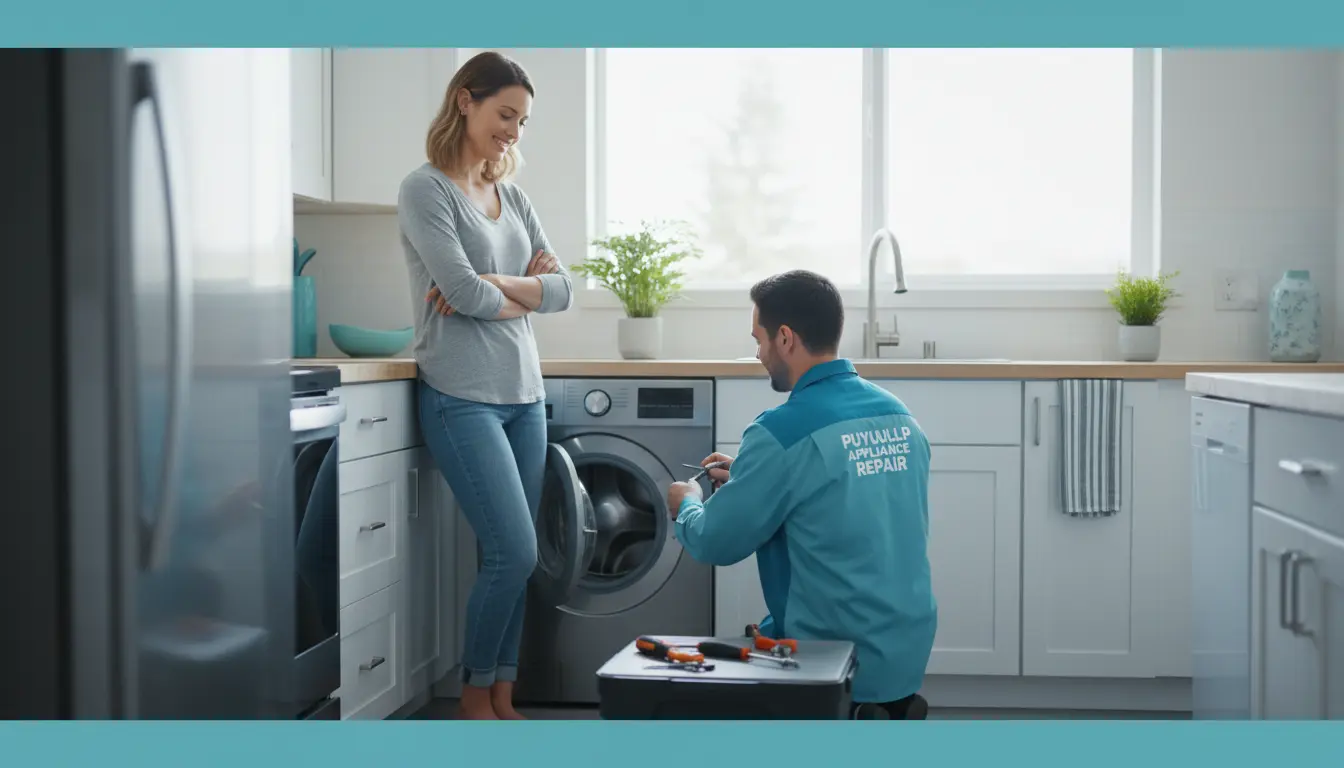
Most homeowners in Puyallup believe that a washing machine refusing to spin is a sign of a major mechanical failure requiring an expensive service call. The counter-intuitive truth is that in a significant percentage of cases—particularly in homes across the South Hill and downtown areas—the root cause is not a broken motor or a failed transmission. It is often a simple electrical continuity issue, a clogged drain pump filter, or a subtle imbalance triggered by local water conditions. Understanding this distinction can save you time, money, and an unnecessary service visit.
Puyallup’s unique mix of historic homes in areas like Maplewood and newer developments in the Summit neighborhood creates a diverse set of challenges for washing machine reliability. The persistent Pacific Northwest moisture affects electronic housing seals, while the region’s soft-to-moderate water profile can lead to scale accumulation on heating elements and sensor components over time. Before you assume the worst, it pays to understand the actual diagnostic process that a certified technician would follow. This article will guide you through the step-by-step professional approach to diagnosing and fixing a washing machine that won’t spin, tailored specifically for Puyallup homes.
Why Puyallup’s Environment Demands a Different Approach to Washing Machine Repair
The climate in Puyallup, Washington, is not kind to household electronics. High humidity levels and frequent rain create an environment where moisture can infiltrate control boards and wiring harnesses through compromised seals. This is especially true in older homes in the Woodland and Riverside areas, where the original laundry room ventilation may not meet modern standards. A washing machine that works perfectly in a dry, inland climate may fail prematurely here due to simple moisture ingress.
Beyond humidity, the water chemistry in Puyallup plays a quiet but significant role. The water supply, sourced from the Green River watershed, is considered soft to moderately hard. While this is generally good for plumbing, the trace minerals and silicates can accumulate inside the washing machine’s drum, drain pump, and pressure switch hose over months of use. This scale accumulation can mislead the machine’s control board into thinking the drum is unbalanced or that water is still present, effectively locking out the spin cycle. Recognizing these local variables is the first step toward accurate home diagnosis and knowing when to call for professional washing machine repair in Puyallup.
Step-by-Step Professional Diagnostics for a No-Spin Issue
A certified technician approaches a no-spin complaint with a systematic methodology, not guesswork. The process begins with a visual inspection, but quickly moves to electrical verification using specific tools. You can replicate many of these steps safely at home, provided you disconnect power first. The goal is to isolate the fault to a specific component—be it the lid switch, door lock assembly, drain pump, control board, or drive motor.
1. Preliminary Multi-Meter Inspection and Continuity Verification
The first tool a technician reaches for is a digital multi-meter (DMM). Before any disassembly, the service manual for the specific model is consulted to identify the correct resistance parameters for the lid switch and door lock. On many modern machines, if the control board does not sense continuity through the door lock circuit, it will refuse to enter the spin cycle entirely. Testing this circuit with the DMM set to resistance (ohms) can reveal a broken wire, a failed switch, or a corroded connector—all common issues in Puyallup’s damp climate.
To perform this test yourself, unplug the machine, locate the door lock assembly (usually behind the front panel near the door catch), and disconnect the wiring harness. Measure the resistance across the switch terminals. A reading of zero or near-zero ohms indicates a closed, functioning switch. An infinite reading (OL) indicates an open circuit, meaning the switch has failed. This simple continuity verification can pinpoint a problem that would otherwise require a full control board replacement if misdiagnosed.
2. Electronic Control Board Diagnostics and Voltage Drop Testing
If the door lock circuit passes, the next step is to check the control board. In Puyallup homes, moisture-related corrosion on the solder joints of the control board is a leading cause of intermittent or complete spin failures. A technician will visually inspect the board for signs of thermal degradation, such as darkened components or cracked solder. They will also use the DMM to check for voltage drops at the terminal block where the machine connects to your home’s power supply.
Voltage drop testing is critical. A washing machine needs 120 volts AC (or 240 volts for some models) under load. If the voltage drops below 110 volts during the spin cycle, the motor may not have enough torque to start or maintain rotation. This is often caused by loose connections at the outlet, a worn breaker, or long runs of undersized wiring in older Puyallup homes. A simple test with a clamp-on ammeter can reveal if the machine is drawing excessive current, indicating a mechanical binding issue rather than an electrical one.
3. Component Isolation: Drain Pump and Drive Motor
The washing machine will not spin if it senses water still in the drum. A clogged drain pump filter is one of the most common and easily fixed causes of a no-spin condition. The filter, often located at the bottom front of the machine behind a small access panel, can trap coins, lint, and small objects. When blocked, the pump cannot evacuate water, and the machine’s safety logic prevents the spin cycle from engaging. Cleaning this filter is a simple DIY task that resolves the issue in many Puyallup homes.
If the drain pump is clear and the machine still won’t spin, the drive motor itself must be tested. This involves checking the motor’s winding resistance with the DMM. Most drive motors have two or three sets of windings (start, run, and sometimes a tachometer sensor). A reading outside the manufacturer’s specified range indicates a failed motor. Additionally, the motor’s carbon brushes (on brushed DC motors) wear down over time. Replacing these brushes is a cost-effective repair compared to replacing the entire motor assembly, and it is a common procedure for technicians servicing Puyallup’s many front-loading machines.
Data Comparison: Professional Component-Level Repair vs. Complete Sub-Assembly Replacement
When diagnosing a washing machine that won’t spin, homeowners and technicians face a decision: repair the specific failed component or replace the entire sub-assembly. The table below outlines the key differences between these two approaches, based on NASTeC core service standards.
| Feature/Metric | Professional Component-Level Repair | Complete Sub-Assembly Replacement |
|---|---|---|
| Diagnostic Time | 45–90 minutes for precise isolation | 15–30 minutes (general fault identification only) |
| Part Longevity | Equal to OEM life if using factory parts | Full lifespan of the new assembly |
| Structural Cost | Lower (e.g., $15–$40 for a lid switch) | Higher (e.g., $150–$400 for a control board) |
| Labor Cost | Higher due to detailed troubleshooting | Lower due to simplified replacement |
| Warranty Compliance | Maintains manufacturer warranty if OEM parts used | Fully compliant with OEM guidelines |
| Risk of Recurrence | Low, if root cause (e.g., moisture) is addressed | Medium, if underlying issues are ignored |
Source: NASTeC Core Appliance Service Reference Standard
Expert Insights and Common Mistakes
Professional technicians rely on a set of advanced diagnostic tips that go beyond basic troubleshooting. These insights can save hours of labor and prevent unnecessary part replacements. Applying these principles in a Puyallup home can make the difference between a quick fix and a costly mistake.
Three Advanced Diagnostic Tips
1. Check the Pressure Switch Hose for Blockage. The pressure switch tells the control board when the drum is empty. If the small rubber hose connecting the switch to the tub becomes clogged with lint or scale accumulation, the switch will never signal that the water is gone. Blowing through the hose or using a thin wire to clear it restores function without replacing any parts. This is especially relevant in Puyallup homes where soft water can cause silicate buildup in these narrow passages.
2. Perform a Tachometer Sensor Test on the Motor. Many modern washing machines use a hall-effect sensor on the motor to monitor spin speed. If this sensor fails or becomes misaligned, the control board will think the motor is not spinning and will shut down the cycle. Using a DMM set to DC voltage, you can measure the sensor’s output while manually rotating the drum. A reading that does not change indicates a failed sensor, which can be replaced individually rather than replacing the entire motor.
3. Inspect the Carbon Brushes on Front-Load Machines. Carbon brushes in the drive motor wear down after roughly 2,000–3,000 hours of operation. In a high-use Puyallup household, this can occur every 3–5 years. If the machine hums but does not spin, worn brushes are a prime suspect. Removing the motor and checking brush length against the minimum specification (usually 1/4 inch) is a quick verification step that can lead to a very inexpensive repair.
Three Common Homeowner Mistakes
1. Overloading the Drum. The most frequent cause of a no-spin condition is simply packing too many clothes into the drum. Modern machines use advanced load-sensing algorithms. When the drum is overloaded, the control board detects an imbalance and refuses to spin to protect the bearings and suspension. The fix is straightforward: remove half the load and try again. However, repeatedly overloading can cause structural bearing failure, leading to a much more expensive repair down the line.
2. Using Chemical Drain Cleaners in the Machine. Homeowners sometimes pour chemical drain cleaners into the washing machine to clear a slow drain. This is a critical error. These chemicals destroy internal rubber seals, hoses, and the drain pump impeller. The resulting leaks can lead to total control board short-circuits if water reaches the electronics. A mechanical clog in the pump filter should be addressed by physical cleaning, not chemical treatment.
3. Ignoring Minor Clicking Cycles. A washing machine that clicks repeatedly before attempting to spin is often experiencing a failing door lock mechanism or a relay burnout on the control board. Ignoring this symptom will eventually lead to a complete lockout. Homeowners who wait until the machine is completely dead often face a total control board replacement, whereas early intervention could have been a simple relay replacement or door lock swap.
Pricing for Washing Machine Repair in Puyallup
Understanding the cost structure for professional repair helps you make informed decisions. While DIY fixes can address some issues, a professional diagnosis ensures no underlying problems are missed. Here is a realistic overview of pricing for washing machine repair services in Puyallup.
- Standard Diagnostic Trip Fee: Most local service providers, including those serving the downtown Puyallup area, charge a diagnostic fee ranging from $79 to $129. This fee covers the technician’s time to inspect the machine, run electrical tests, and provide a detailed estimate. This fee is often waived if you proceed with the repair.
- Component-Level Repair Costs: Replacing a specific part like a lid switch, door lock, or drain pump typically costs between $150 and $300, including parts and labor. For example, replacing a failed lid switch on a top-load machine is a straightforward job that can be completed in under an hour, keeping labor costs low.
- Sub-Assembly Replacement Costs: Replacing a control board, drive motor, or transmission is more expensive, ranging from $350 to $700. The higher cost is due to the price of OEM parts and the additional diagnostic time required to ensure the new component is correctly calibrated. Advanced electronic control module flashing may be needed for some models, adding to the labor time.
- Factors Influencing Cost: Three primary factors affect the final bill. First, the need for premium luxury brand OEM parts (e.g., for Miele or Bosch machines) can double the cost of standard parts. Second, physical accessibility—a front-load machine built into a custom cabinet in a Puyallup home may require disassembly of cabinetry, increasing labor time. Third, the complexity of the diagnosis: intermittent faults that require multiple test cycles will increase diagnostic time and cost.
Safety and Standards for Washing Machine Repair
Appliance repair is not just about fixing the machine—it is about ensuring the safety of your home and family. Every technician in Puyallup should adhere to strict safety standards, and homeowners should be aware of these protocols when considering DIY repairs or hiring a professional. The risks of improper repair include electrical shock, fire, and property damage from water leaks.
Certified technicians hold credentials such as NASTeC certification, which requires demonstrated competence in electrical safety, mechanical systems, and diagnostic procedures. For machines that use refrigerant (rare in washers, but common in dryers and refrigerators), EPA Section 608 certification is mandatory for handling refrigerants. All repairs should be performed with the appliance disconnected from power. After repair, a full operational test should be conducted to verify that all safety interlocks function correctly.
Frequently Asked Questions About Washing Machine Spin Problems
Why does my washing machine hum but not spin?
This is a classic symptom of a failed start capacitor or worn carbon brushes on the drive motor. The humming sound indicates that electrical power is reaching the motor, but the motor lacks the torque to begin rotating. On machines with a start capacitor, the capacitor stores energy to give the motor an initial kick. If the capacitor is dead (open circuit or shorted), the motor will hum but not turn. Testing the capacitor with a DMM set to capacitance mode will confirm whether it is within specification. Worn brushes, as mentioned earlier, also prevent the motor from generating sufficient electromagnetic force to start spinning.
Can a clogged drain filter cause the spin cycle to not work?
Yes, absolutely. The washing machine’s control board uses a pressure switch or a water level sensor to determine if the drum is empty. If the drain pump cannot remove water because the filter is clogged, the sensor will continue to signal that water is present. The machine’s safety logic will then prevent the spin cycle from engaging to avoid damaging the motor or bearings. Cleaning the drain pump filter is the first thing a technician checks, and it is a simple task you can perform yourself. The filter is typically located behind a small access panel at the bottom front of the machine.
Is it safe to run the machine if the spin cycle is intermittent?
It is not recommended. An intermittent spin cycle often indicates a failing electrical connection, a degraded control board, or a mechanical issue like a worn bearing. Running the machine in this state can cause a component to fail catastrophically, leading to a fire hazard from arcing wires or water damage from a burst hose. Intermittent faults are best diagnosed by a professional who can use specialized tools to capture the fault as it occurs. Ignoring the problem will almost always lead to a more expensive repair.
How does Puyallup water quality affect my washing machine’s spin performance?
Puyallup’s water, sourced from the Green River watershed, is relatively soft but contains dissolved silicates and trace minerals. Over time, these minerals can accumulate inside the pressure switch hose, on the water level sensor, and on the heating element (if your machine has one). This scale accumulation can cause the pressure switch to stick, sending a false signal to the control board that water is still in the drum. Regular cleaning of the pressure switch hose and using a washing machine cleaner every three months can prevent this issue. This is a common recommendation from technicians in the Puyallup area.
Professional Appliance Care in Puyallup
Maintaining a washing machine in a Puyallup home requires a blend of proactive maintenance and an understanding of the local environmental factors. The high humidity, soft water, and mix of historic and new construction all create unique challenges that a one-size-fits-all troubleshooting guide cannot address. By following the professional diagnostic steps outlined here—starting with a simple continuity check and moving through component isolation—you can often resolve a no-spin issue without a service call.
However, when the problem is beyond a simple DIY fix, such as a failed control board or a mechanical bearing failure, turning to a certified professional is the smartest path. At South Hill VS Major Appliance Repair, we bring factory-certified expertise, OEM parts, and a deep understanding of Puyallup’s specific appliance repair needs. Whether your machine is in a historic home in the Woodland neighborhood or a new build in the Summit area, our technicians are trained to diagnose and repair any washing machine model quickly and safely. Contact us today for a reliable, professional solution that will keep your laundry running smoothly for years to come.