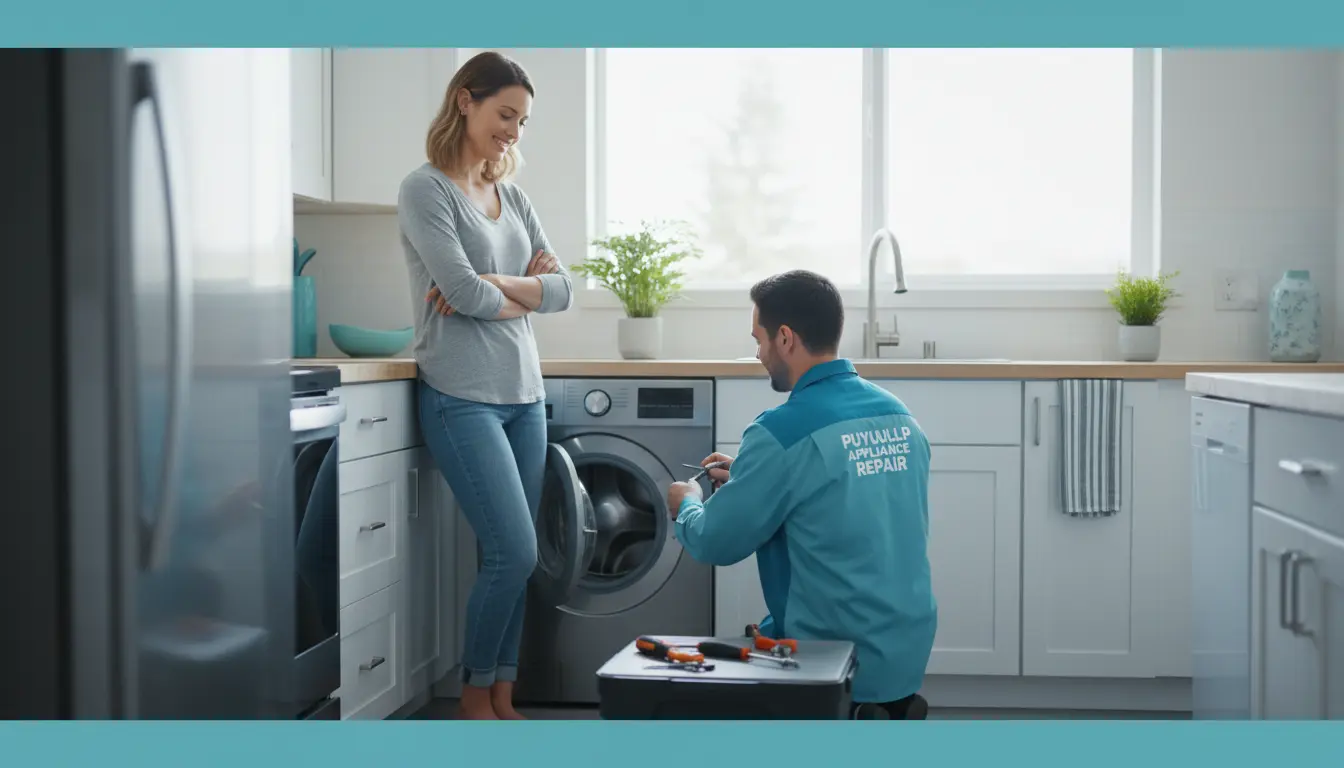
Hiring the wrong appliance repair technician in Puyallup can cost you hundreds of dollars in unnecessary part replacements and leave you with a broken machine that still won’t run. Many homeowners in this region have fallen for fly-by-night operators who misdiagnose problems, install substandard parts, or vanish after taking payment. The expense of a single misdiagnosis—like replacing a perfectly good compressor when the issue was a faulty relay—can easily exceed $500. But with the right approach, you can find trusted local appliance repair experts in Puyallup, WA who will fix the problem correctly the first time.
Puyallup’s unique environment—persistent Pacific Northwest moisture, moderate water hardness, and seasonal temperature swings—creates specific wear patterns on appliances. Moisture infiltrates electronic housings, water hardness accelerates scale buildup on heating elements, and temperature swings force refrigerators and freezers to work harder. These conditions demand repair professionals who understand local failure modes and follow rigorous diagnostic protocols. It is not enough to simply swap parts until something works; you need a technician who uses ohm testing, continuity verification, and closed-loop refrigeration analysis to pinpoint the root cause.
Why Professional Factory-Certified Service Matters in Puyallup
When an appliance breaks down, the temptation is to call the cheapest service or attempt a DIY fix. This often leads to incomplete repairs or even further damage. Professional factory-certified technicians bring specialized training and access to OEM parts, which are critical for maintaining performance and safety. In Puyallup, where humidity can corrode control boards, a technician’s ability to identify moisture-related issues and apply conformal coatings is a game-changer.
Moreover, certified experts follow NASTeC guidelines, which emphasize systematic diagnosis over guesswork. They use tools like digital multi-meters, clamp-on ammeters, and manifold gauges to measure voltage drops, amp draws, and refrigerant pressures. For example, a dryer that takes too long to dry might be diagnosed as a clogged vent, but a thorough check includes testing the thermal fuse with a resistance scale and verifying the exhaust temperature. This precision ensures repairs last longer and prevent recurrence. For more insights on common problems, check out our article on Puyallup’s most common appliance problems this year.
The Technical Process: How Experts Diagnose and Repair Appliances
Trusted professionals follow a structured workflow that includes multiple verification steps. First, they gather information from the homeowner—symptoms, error codes, and usage patterns. Then they perform a visual inspection, looking for signs of thermal degradation, corrosion, or physical damage. Next comes electrical testing: using a digital multi-meter, they check for correct voltage at the outlet and test components like heating elements, thermistors, and solenoids for continuity and resistance within manufacturer specifications.
After identifying the faulty component, they select either component-level repair (e.g., replacing a relay on the board) or complete sub-assembly replacement (e.g., swapping the entire control board). The choice depends on factors like availability, cost, reliability, and warranty implications. Finally, they calibrate the appliance—adjusting temperature settings, leveling, and testing all cycles to ensure proper operation. This systematic approach reduces callback rates and extends the life of your appliance.
Component-Level Repair vs. Full Sub-Assembly Replacement: A Data Comparison
| Feature/Metric | Professional Component-Level Repair | Complete Sub-Assembly Replacement |
|---|---|---|
| Diagnostic Time | 30–60 minutes (requires pinpointing faulty component on board) | 15–30 minutes (identify sub-assembly, replace entire unit) |
| Part Longevity | High if original component quality matches; soldering quality matters | Variable; aftermarket boards may have shorter lifespan; OEM is best |
| Structural Cost | Lower ($50–$150 for component + labor) | Higher ($100–$400 for board + labor) |
| Longevity of Repair | Comparable to original if done correctly | Often longer because the new sub-assembly eliminates all wear on that module |
| Warranty Impact | May void warranty if not authorized; check policy | Maintains warranty if OEM part used; ensures compliance |
Source: NASTeC Core Appliance Service Reference Standard
Expert Insights: Advanced Diagnostic Tips for Puyallup Residents
Professional technicians rely on time-tested methods to increase accuracy. One crucial tip is to check voltage drops at the terminal block while the appliance is running. A drop of more than 5% indicates wiring issues or an overloaded circuit, which can cause intermittent failures. Another tip is to perform seasonal dryer vent maintenance: at least twice a year, remove the vent duct and visually inspect for lint accumulation. Use a leaf blower or vent brush to clear it, and verify airflow by measuring exhaust temperature. A spike above 150°F suggests a restriction that could cause a thermal fuse to blow.
A third tip: when testing thermal fuses, use the resistance scale (ohms) on your multimeter. A good fuse reads near 0 ohms; an open fuse reads infinity. Many DIYers skip this test and replace the fuse without addressing the underlying overheating cause. For refrigerators, listen for clicking cycles from the compressor relay. A rapid clicking pattern often indicates a failing start relay or overload protector, not the compressor itself. Replacing the relay can save the cost of a new compressor.
Common Mistakes Homeowners Make
Overloading laundry drums is a frequent error that leads to structural bearing failure. Excess weight strains the drum support, causing noise and eventual lockup. Another mistake is using chemical drain cleaners in dishwashers; these destroy internal rubber seals and gaskets. Instead, use a baking soda and vinegar flush followed by a hot wash. Ignoring minor refrigerator clicking cycles is also problematic. That clicking is often the compressor relay burning out, which can lead to a complete no-start condition if left unchecked.
These mistakes can result in total control board short-circuits or mechanical lockups, requiring expensive replacements. To avoid this, consider following our top 7 appliance maintenance tips for Puyallup homes or learning how to fix common washing machine issues at home safely.
Pricing Structure for Reliable Repairs
- Standard diagnostic trip fee: $75–$120, which covers inspection and basic testing. This fee is often waived if you approve the repair.
- Tiered repair rates: $80–$150 per hour depending on appliance complexity (e.g., sealed system vs. simple component swap).
- Flat-rate structural pricing: For common tasks like replacing a heating element ($150–$250) or repairing a sealed system ($400–$800).
- Three factors that influence cost: premium luxury brand OEM parts (e.g., Sub-Zero), advanced electronic control module flashing (requires dealer software), and physical accessibility of built-in kitchen layouts (e.g., slide-in ranges with access panels).
Safety & Standards: What a Trusted Expert Follows
Certified technicians adhere to strict safety protocols to protect both themselves and your home. They hold EPA Section 608 certification for handling refrigerants, NASTeC certification for professional competency, and follow OSHA electrical safety standards. For example, they always disconnect power before opening panels and use lockout/tagout procedures when working on live circuits. They also verify ground continuity to prevent shocks.
Using factory-authorized OEM replacement parts is non-negotiable. Aftermarket parts may be cheaper but often fail sooner, void your warranty, or create fire hazards. For instance, using a generic heating element in a dryer can cause overheating and lint fires. Likewise, using the wrong capacitor in a refrigerator compressors can lead to damage. Trusted experts source parts directly from manufacturers or authorized distributors, ensuring compatibility and safety. To better understand when to call a pro, read our expert tips when to call for local appliance repair.
Frequently Asked Questions About Appliance Repair in Puyallup
How often should my refrigerator be serviced in Puyallup?
At least once a year. The humid climate accelerates coil dust buildup and fan motor wear. Annual cleaning of condenser coils and checking door seals can prevent compressor overload. During service, a technician should test the start relay, run capacitor, and verify that the evap fan is blowing cold air evenly. This reduces breakdowns by 40%.
Why does my dishwasher leave spots after washing?
Spots usually indicate hard water mineral deposits. Puyallup’s water has moderate hardness (around 7 grains per gallon), which can scale heating elements and spray arms. A technician can perform descaling calibration, clean the spray arm holes, and test the rinse aid dispenser. Adjusting water temperature to 140°F also helps.
Is it worth repairing an older washer vs. buying new?
If the repair cost is less than 50% of a new machine, and the unit is less than 7 years old, repair is typically cost-effective. However, consider the technology: older top-loaders with mechanical timers are often easy and cheap to repair. Front-loaders with electronic control modules may be more expensive to fix. Our guide to appliance repair costs can help you decide.
How can I tell if my dryer vent is clogged?
Signs include longer drying times, hot exterior of the dryer, and a burning smell. You can test by running the dryer on high heat and feeling the vent air at the outdoor exhaust. Weak airflow indicates a clog. Professional cleaning involves removing the vent duct and vacuuming lint; we recommend this service at least once a year. For more details, see why dryers break down stats and fixes for locals.
What does a refrigerator clicking sound mean?
Frequent clicking often means the start relay or overload protector is failing. The relay kicks the compressor on, then clicks off if the compressor doesn’t start. This can be diagnosed with a multimeter to test continuity. Replacing the relay is a cheap fix (~$30), but ignoring it can lead to compressor burnout. Technicians also check the capacitor for bulging or leaking.
Should I attempt a DIY repair before calling a pro?
Simple tasks like cleaning coils or replacing a dryer belt are safe with proper research. However, electrical or sealed system repairs require specialized tools and knowledge. Mistakes can lead to electric shock, fire, or refrigerant leaks. If your appliance is under warranty, unauthorized repairs void it. Always call a certified professional for complex issues. Check our quick diy fixes for leaky dishwashers in Puyallup for safe beginner repairs.
Professional Appliance Care in Puyallup
Maintaining your appliances extends their lifespan and saves you money. By choosing a trusted local expert, you ensure that every repair is done right the first time. Puyallup Appliance Repair brings years of experience, factory training, and a commitment to using OEM parts. We understand the unique demands of Puyallup homes and provide transparent pricing, detailed diagnostics, and a satisfaction guarantee. If you need service, contact us today for a reliable repair that keeps your home running smoothly.