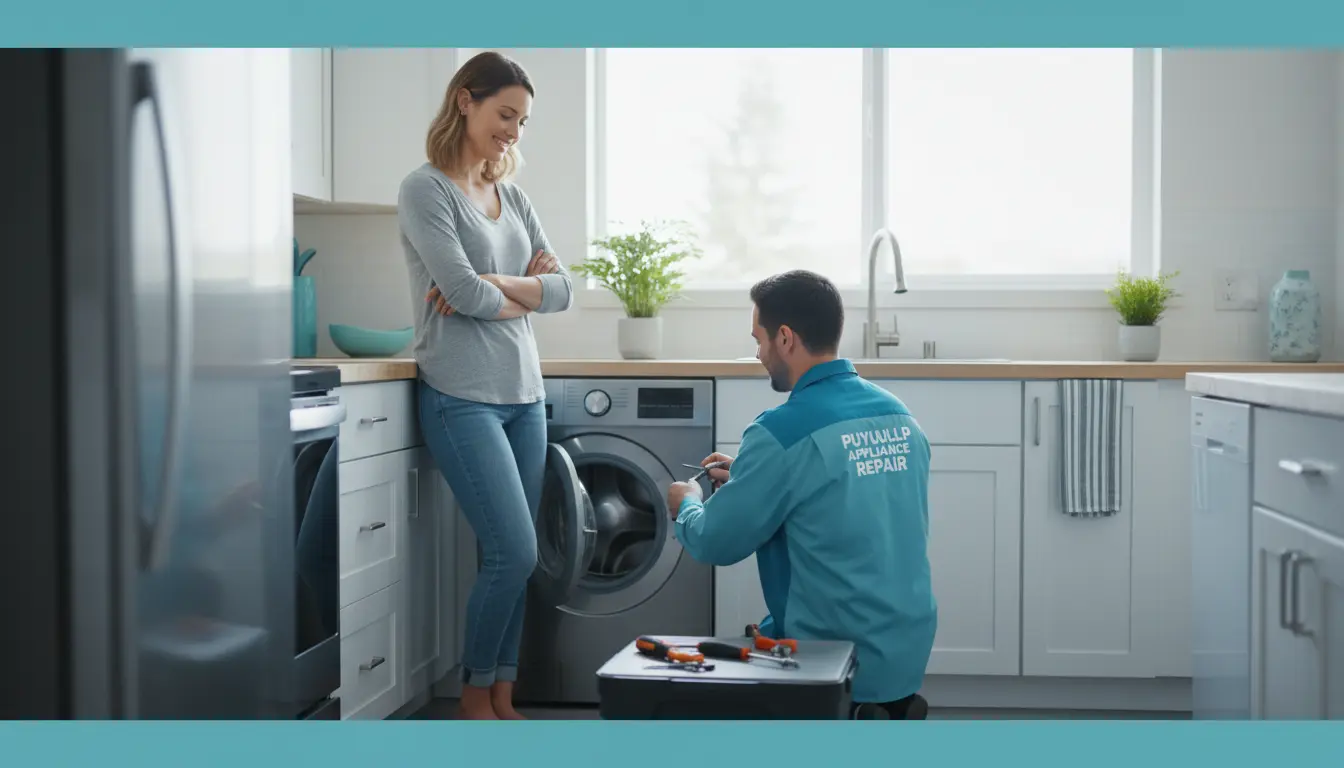
A refrigerator repair technician in Puyallup is a specialized electromechanical service professional trained to diagnose and restore sealed-system and electronic control failures in residential refrigeration units. This role is distinct from a general handyman or a self-taught repair person, who may attempt temporary fixes without understanding the thermodynamic principles, electrical safety protocols, or manufacturer-specific diagnostic codes that govern modern refrigerators. In Puyallup, where seasonal humidity places extra stress on condenser coils and electronic housing seals, the difference between a component-level repair and a surface-level patch can mean the difference between a refrigerator that runs efficiently for another five years and one that fails completely within months.
Selecting the right technician requires more than reading online reviews. It demands an understanding of what constitutes proper diagnosis, which certifications matter, and why local environmental factors like Pacific Northwest moisture and fluctuating temperatures directly affect the longevity of any repair. This guide walks through the technical workflow, the cost considerations, and the safety standards that separate a qualified professional from a costly mistake. Whether you live in a historic home near downtown Puyallup or a new development in South Hill, knowing how to choose the best refrigerator repair technician in Puyallup will save you time, money, and the frustration of a recurring breakdown.
What Defines a Professional Refrigerator Repair Technician in Puyallup
A certified technician brings a combination of training, tools, and local knowledge that general repair services lack. The most important credential is EPA Section 608 certification, which is required by federal law for anyone handling refrigerants. Without it, a technician cannot legally recover, recycle, or recharge refrigerant, meaning any sealed-system repair is not only dangerous but also illegal. Additionally, membership in organizations like NASTeC (National Appliance Service Technician Certification) indicates a commitment to ongoing education and adherence to industry standards.
Local experience matters as much as certification. Puyallup’s climate—with its damp winters and mild summers—leads to specific failure patterns. Condenser coils clog faster with dust and pollen, electronic control boards suffer from moisture intrusion, and ice maker assemblies often fail due to hard water scale accumulation. A technician who has worked extensively in the Pudget Sound region will recognize these issues immediately and carry the correct OEM parts, rather than ordering generic replacements that may not fit or function properly. For instance, a technician familiar with Puyallup’s water profile will know to check for calcium buildup on the water inlet valve during a no-ice complaint, saving hours of unnecessary troubleshooting.
The Technical Process of a Proper Refrigerator Diagnosis
Professional diagnostics follow a structured sequence that isolates the root cause without guesswork. The first step is a visual inspection of the condenser coils, evaporator fan, and compressor area. This reveals obvious issues like dirty coils, seized fan motors, or refrigerant oil residue. Next, the technician uses a digital multimeter to perform ohm testing on the compressor windings, checking for continuity and resistance values that match the manufacturer’s specifications. A reading outside the typical 3–15 ohm range for the run winding, or an open circuit on the start winding, indicates a compressor failure that requires sealed-system service.
After verifying the compressor, the technician moves to the electronic control board. Using a clamp-on ammeter, they measure current draw on the main power line and on individual circuits. Abnormally low current suggests a failed relay or thermistor, while high current points to a shorted component. In Puyallup’s humid environment, corrosion on the control board’s solder joints is common, so the technician will also perform a visual inspection under magnification. If the board is salvageable, they may clean it with isopropyl alcohol and reseat all connectors. If not, replacement is necessary.
The final diagnostic step involves the sealed system. The technician connects manifold gauges to the service ports and reads the high- and low-side pressures. Comparing these pressures to the ambient temperature and the manufacturer’s pressure-temperature chart allows them to determine if the refrigerant charge is correct, if there is a restriction in the capillary tube, or if the compressor is inefficient. In some cases, a small leak can be detected using an electronic leak detector that responds to halogen gases. For Puyallup homes, where equipment is often located in garages or basements with fluctuating temperatures, the technician must account for the ambient conditions when interpreting gauge readings to avoid false diagnoses.
Component-Level Repair vs. Complete Sub-Assembly Replacement
| Feature / Metric | Professional Component-Level Repair | Complete Sub-Assembly Replacement |
|---|---|---|
| Diagnostic Time | 45–90 minutes (includes isolation of individual component) | 20–30 minutes (identifies failed sub-assembly only) |
| Part Longevity | Often matches original lifespan if OEM part used | May exceed original if sub-assembly is redesigned |
| Structural Cost | Lower upfront cost ($150–$400) but higher labor time | Higher upfront cost ($300–$800) but less labor |
| Skill Level Required | High (requires circuit tracing, soldering, calibration) | Moderate (plug-and-play with basic wiring knowledge) |
| Risk of Recurrence | Low if root cause is addressed (e.g., also cleaning coils) | Moderate if underlying issue (e.g., voltage spike) remains |
| Warranty Coverage | Typically 90 days on labor, 1 year on part | Typically 1 year on both labor and part |
Source: NASTeC Core Appliance Service Reference Standard
Expert Insights for Identifying a Qualified Technician
Check voltage drops at the terminal block
A common oversight is ignoring the voltage supply to the refrigerator. The technician should measure the voltage at the wall outlet and at the unit’s terminal block while the compressor is running. A drop of more than 5% under load indicates a wiring issue, a bad outlet, or an overloaded circuit. In Puyallup’s older homes, especially near downtown, dated electrical panels can cause voltage sags that lead to premature compressor failure. A technician who addresses the voltage drop before replacing the compressor shows true expertise.
Test thermal fuses using resistance scales
Many refrigerators have thermal fuses that blow when the defrost heater overheats. Instead of replacing the fuse blindly, a professional uses the multimeter’s resistance scale to verify an open circuit. They also check the defrost thermostat and heater element for continuity. Skipping these steps often results in a repeat call within a week.
Verify the evaporator fan motor for intermittent operation
The evaporator fan motor is a common failure point, but it can run intermittently when bearings are failing. A technician should run the refrigerator in diagnostic mode and listen for grinding or rubbing sounds. They should also manually spin the fan blade to feel for rough spots. Replacing a fan motor that only fails sometimes requires isolating the thermal overload inside the motor, which a general repair person may not know how to do.
Common Mistakes Homeowners Make When Hiring a Repair Technician
One frequent error is hiring a technician who does not carry OEM parts. Aftermarket parts may be cheaper, but they often have different tolerances, leading to reduced efficiency or early failure. For example, using a generic condenser fan motor that draws 0.5 amps instead of the OEM 0.3 amps can overload the control board and cause a short circuit. Another mistake is ignoring the technician’s diagnostic process. A qualified technician will spend time measuring and testing, not just visually inspecting. If a technician offers a diagnosis in under ten minutes without using any tools, they are likely guessing.
Finally, many homeowners in Puyallup overlook the importance of verifying the technician’s insurance and licensing. A reputable company carries liability insurance to cover accidental damage to your property, as well as workers’ compensation for their employees. If a technician is injured on your property or damages your refrigerator, you could be held financially responsible without proper insurance. Always ask for proof of insurance before allowing any work to begin.
Pricing Structures for Refrigerator Repair in Puyallup
- Diagnostic trip fee: Typically $75–$125, which covers the initial visit and diagnostic work. Some companies apply this fee to the repair cost if you proceed with the service.
- Component-level repair labor: $100–$150 per hour, with most simple repairs (replacing a fan motor, defrost timer, or thermostat) taking one to two hours.
- Sealed-system repair: $400–$800 for refrigerant recovery, leak repair, evacuation, and recharge. This is the most expensive category because it requires EPA certification and specialized equipment like a vacuum pump and recovery machine.
- Control board replacement: $250–$500 including the part and programming. Some boards need to be flashed with the latest firmware, which adds to the cost.
Three factors that influence cost significantly are the brand of refrigerator (luxury brands like Sub-Zero or Viking have higher-priced OEM parts), the accessibility of the unit (built-in or counter-depth models often require removing surrounding cabinetry), and the time of year. During summer, when refrigerator failures peak, some companies raise their trip fees due to high demand. Scheduling a repair during the off-season can save you $20–$50.
Safety and Standards That Protect You and Your Appliance
Proper safety protocols begin with the technician’s own equipment. They should wear insulated gloves and safety glasses when working on live circuits or refrigerant lines. Electrical safety grounding is critical: the technician must verify that the refrigerator is properly grounded before plugging it back in after a repair. Many older Puyallup homes have two-prong outlets that lack a ground wire, which can create a shock hazard. A professional will recommend installing a GFCI outlet if the existing outlet is ungrounded.
For refrigerant handling, EPA Section 608 certification requires technicians to use a recovery machine that captures the refrigerant before any repair or disposal. Venting refrigerant into the atmosphere is illegal and harmful to the environment. A technician who does not use a recovery machine should be reported. Additionally, OEM parts are not just a quality issue—they are a safety issue. Non-OEM gaskets may not seal properly, leading to moisture ingress and electrical shorts. OEM pressure switches are calibrated to shut off the compressor if the refrigerant pressure drops too low, preventing damage to the compressor. Using a generic switch can cause the compressor to run until it burns out, creating a fire risk.
Frequently Asked Questions About Refrigerator Repair in Puyallup
How long does a typical refrigerator repair take in Puyallup?
Most component-level repairs, such as replacing a start relay, condenser fan motor, or defrost heater, take between one and two hours. Sealed-system repairs, including refrigerant recharge and leak repair, can take three to four hours because the system must be evacuated and held under vacuum to remove moisture before recharging. The technician will also need time to bring the refrigerator down to temperature after the repair, which may add another hour.
What should I do if my refrigerator is still under warranty?
If your refrigerator is under the manufacturer’s warranty, you should call the manufacturer first. They will authorize a service call from a certified warranty provider. Using an unauthorized technician can void the warranty. However, if the warranty has expired or the issue is not covered (such as damage from a power surge), you are free to hire any qualified technician. Make sure to keep the repair receipt for any future warranty claims on replaced parts.
Why is the refrigerator making a clicking sound but not cooling?
A clicking sound that repeats every few seconds often indicates a failed start relay or a defective compressor. The start relay provides the initial jolt of electricity to start the compressor. If the relay fails, the compressor tries to start but cannot, causing the overload protector to trip and reset. This creates the clicking cycle. A technician can test the relay with a multimeter for continuity. If the relay is good, the compressor itself may be locked or have worn windings, which requires sealed-system service.
Can I repair a refrigerant leak myself?
No. Refrigerant is a hazardous substance, and handling it without EPA Section 608 certification is illegal. Additionally, fixing a leak requires specialized tools like a refrigerant leak detector, manifold gauges, and a vacuum pump. Attempting a DIY repair can result in improper charging, which damages the compressor, or in releasing refrigerant into the atmosphere, which carries significant fines. Always hire a certified technician for any sealed-system work.
How often should I have my refrigerator serviced in Puyallup?
Annual maintenance is recommended, especially for homes with hard water or high humidity. A professional can clean the condenser coils, check the door gaskets for seal integrity, and inspect the evaporator fan for excessive frost. In Puyallup, where the air is often damp, the coils can become clogged with dust and mold within six months. Regular service also catches small issues, like a failing start relay, before they cause a total breakdown. For more detailed maintenance tips, see our Top 7 Appliance Maintenance Tips for Puyallup Homes.
Professional Appliance Care in Puyallup
Choosing the right refrigerator repair technician in Puyallup is an investment in the longevity of your appliance and the safety of your home. A qualified professional brings EPA certification, local experience, and a methodical diagnostic process that minimizes guesswork and maximizes efficiency. Whether you are dealing with a buzzing compressor, a warm freezer, or a leaking water line, trusting a technician who follows NASTeC standards and uses OEM parts ensures the repair will last.
Puyallup Appliance Repair is the most practical, highly-trained, and reliable service network in the area. Our technicians are EPA Section 608 certified, carry full insurance, and have years of experience working specifically with the brands and conditions common in Puyallup homes. We do not cut corners—we diagnose at the component level, use only OEM replacement parts, and provide transparent pricing upfront. If you need a refrigerator repair, do not settle for a temporary fix. Contact us today to schedule a professional diagnostic visit.