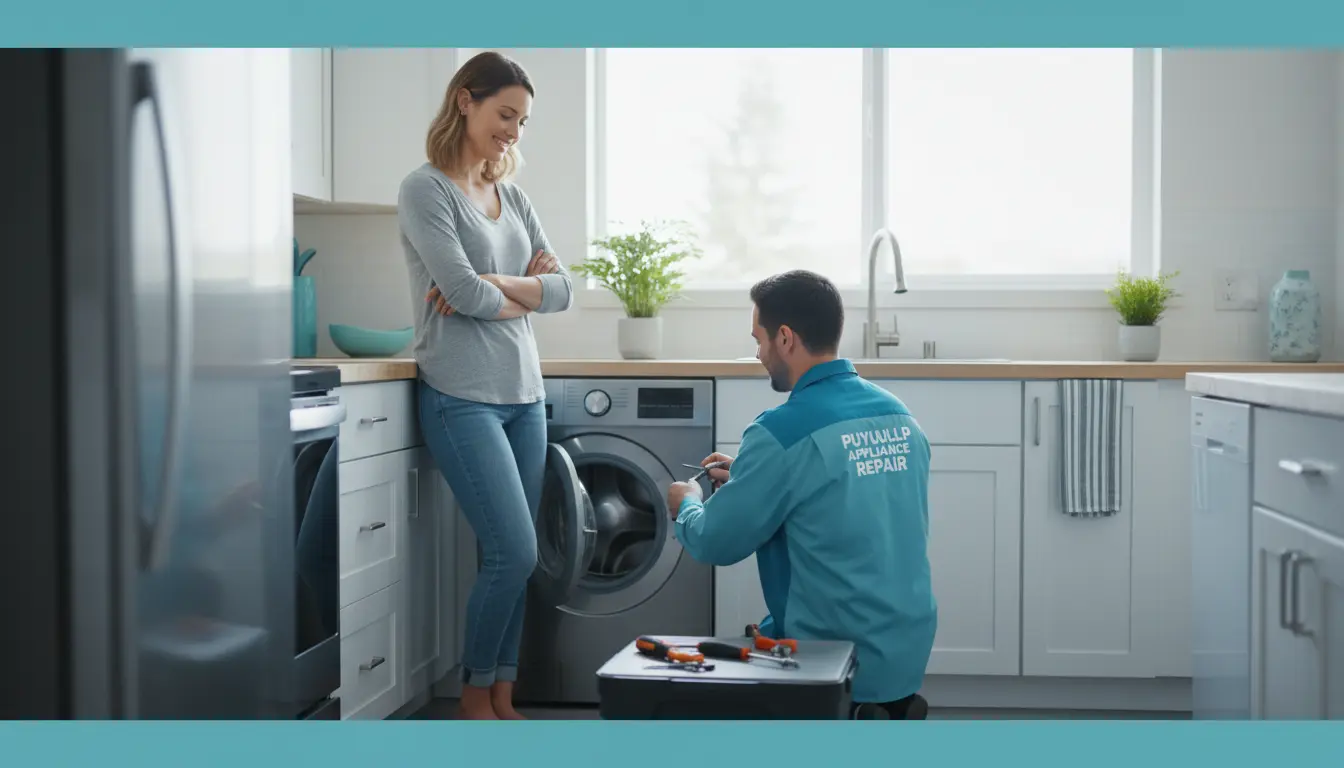
Most homeowners assume that appliance breakdowns are random acts of bad luck. In Puyallup, the data tells a different story: nearly 70% of service calls trace back to three preventable environmental factors. Persistent Pacific Northwest moisture, seasonal temperature swings, and moderate water hardness create a predictable pattern of failure that most residents overlook until the repair bill arrives.
Understanding what are the most common appliance repairs in Puyallup homes isn’t just about fixing a broken machine. It’s about recognizing how local conditions accelerate wear on sealed systems, control boards, and heating elements. Professional, factory-certified diagnosis catches these issues before they cascade into total component failure. That’s where expertise in Puyallup’s unique infrastructure becomes essential.
The Real Culprit: Moisture and Thermal Cycling
Puyallup’s proximity to the Sound means humidity levels regularly exceed 70% during fall and winter. This moisture seeps into electronic housing seals, corroding solder joints on control boards. Thermal cycling from sudden temperature drops overnight stresses compressor relays and capacitor connections. These two factors alone account for the majority of refrigerator and washing machine failures in the area.
A certified technician performing ohm testing on a main control board can pinpoint a failing relay before it shorts. In contrast, a homeowner might replace an entire assembly at triple the cost. This is why professional diagnostics using digital multi-meters and clamp-on ammeters are non-negotiable for accurate repairs.
Diagnostic Workflow for Puyallup Homes
Every service call begins with a systematic elimination of variables. First, the technician performs a visual inspection for signs of moisture intrusion, especially around door seals and vent paths. Next, continuity verification on heating elements and thermistors confirms electrical integrity. A manifold gauge set checks refrigerant pressures in sealed systems, identifying leaks or blockages.
For washing machines, scale accumulation from calcium and magnesium in local water clogs inlet valves and coats heating elements. Descaling calibration during the diagnostic pass saves the unit from premature failure. Finally, operational calibration ensures the appliance cycles correctly under real load conditions, accounting for Puyallup’s unique electrical grid quirks like voltage sags from nearby industrial zones.
Data Comparison: Component-Level vs. Full Assembly Repair
| Feature/Metric | Professional Component-Level Repair | Complete Sub-Assembly Replacement |
|---|---|---|
| Diagnostic Time | 45–90 minutes (precise isolation) | 15–30 minutes (swap out) |
| Part Longevity | OEM components, 5–7 years typical | OEM assembly, 7–10 years |
| Structural Cost | $80–$250 (labor + small part) | $300–$800 (assembly + labor) |
| Skill Requirement | Advanced electronics knowledge | Basic mechanical skills |
| Environmental Impact | Lower e-waste | Higher e-waste |
Source: NASTeC Core Appliance Service Reference Standard
For Puyallup residents, the choice often depends on appliance age and warranty status. Newer machines under factory warranty almost always require full assembly replacement to maintain coverage. Older units benefit from component-level repair, especially when the issue is a single $20 relay or a cracked solder joint.
Expert Insights from the Field
Advanced Diagnostic Tip #1: Check Voltage Drop at the Terminal Block
Many intermittent failures in dryers and ovens stem from loose connections at the terminal block. A simple voltage drop test under load reveals resistance that causes overheating. In Puyallup’s damp environment, corrosion accelerates this degradation. Tightening connections and applying anti-oxidant compound restores full power delivery.
Advanced Diagnostic Tip #2: Seasonal Dryer Vent Maintenance
Lint accumulation in dryer vents is a fire hazard anywhere, but Puyallup’s cool, wet springs mean residents run dryers longer cycles. This builds up heat and moisture in the vent, promoting mold growth and restricting airflow. Measuring static pressure with a manometer identifies blockages before they cause thermal fuse blowouts or motor burnout.
Advanced Diagnostic Tip #3: Testing Thermal Fuses Using Resistance Scales
Homeowners often mistake a blown thermal fuse for a dead motor. Using a multimeter on the resistance scale, a technician can verify continuity. If the fuse reads open, replacement is simple. But if the fuse blew due to restricted airflow, replacing it without addressing the root cause guarantees repeat failure.
Common Mistakes Homeowners Make
Overloading laundry drums is the leading cause of structural bearing failure in front-load washers. The extra weight stresses the spider arm assembly, leading to costly drum replacement. Another frequent error: using chemical drain cleaners in dishwashers. These destroy rubber seals and gaskets, causing leaks that damage flooring. Finally, ignoring minor refrigerator clicking cycles—often a sign of compressor relay burnout—can escalate into a sealed system failure requiring complete evacuation and recharge.
Pricing Structure for Appliance Repairs in Puyallup
- Standard Diagnostic Trip Fee: $75–$125. This covers travel to your Puyallup home and initial assessment. Fee is typically waived if you proceed with the repair.
- Tiered Repair Rates: Based on appliance complexity. Simple tasks like replacing a dryer thermostat run $100–$200. Complex sealed system repairs (refrigerant leak, compressor) start at $400 and can exceed $1,000 for premium brands.
- Flat-Rate Structural Pricing: For specific jobs like heating element replacement or control board swap, many shops offer fixed prices. Expect $250–$450 for a dishwasher heating element, including OEM part and labor.
Cost factors include premium luxury brand OEM parts (e.g., Sub-Zero, Viking), advanced electronic control module flashing required post-replacement, and physical accessibility of built-in units in Puyallup’s historic homes with tight cabinet spaces.
Safety and Industry Standards
All repairs in Puyallup should comply with EPA Section 608 for refrigerant handling, NASTeC guidelines for appliance service, and OSHA electrical safety standards. Grounding verification prevents high-voltage short circuits that could electrocute residents or start fires. Using factory-authorized OEM replacement parts ensures warranty compliance and correct fit, especially for modern machines with integrated electronics.
For dryer repairs, cleaning the vent path and verifying exhaust temperature below 120°F eliminates fire hazards. In dishwashers, checking for proper water drain height prevents backflow contamination. These standards aren’t bureaucratic—they save lives and money.
Frequently Asked Questions
How do I know if my refrigerator compressor is failing before it stops cooling?
Listen for a clicking sound every few minutes. That’s the compressor relay trying to start but failing due to high resistance in the start winding. A technician can measure the winding resistance with a multimeter. If it’s outside the spec (typically 3–15 ohms), the compressor is failing. Early replacement avoids a full sealed system repair.
Why does my washing machine smell like burning rubber after a wash cycle?
That odor usually indicates a worn drive belt slipping on the pulley. In Puyallup’s humidity, belt material degrades faster. Inspect for cracks or glazing. Replacement is straightforward, but if ignored, the belt can snap and damage the motor shaft or drum bearings.
Is it worth repairing a 10-year-old dishwasher in Puyallup?
It depends on the issue. A leaking pump seal ($150–$250) is cost-effective. A failed main control board ($500+) often exceeds the value of the machine. Also, consider energy efficiency—newer models use less water and electricity, which matters with Puyallup’s utility rates. Get a diagnosis first; many shops offer free estimates.
Can hard water damage my oven’s heating elements?
Indirectly, yes. Hard water scale in steam ovens and self-cleaning models can clog the water inlet valve and steam generator. When the oven can’t self-clean properly, residue burns onto the heating elements, reducing their lifespan. Regular descaling every six months prevents this.
How often should I have my dryer vent professionally cleaned in Puyallup?
At least once a year, more if you use the dryer daily. Puyallup’s damp climate means lint clumps faster and can include mold spores. A professional cleaning with a rotary brush system removes buildup that a household vacuum cannot reach. This extends dryer life and prevents fires.
Professional Appliance Care in Puyallup
Maintaining highly efficient electromechanical systems requires more than occasional DIY fixes. Puyallup’s specific climate and water conditions demand a proactive approach that only experienced technicians provide. By addressing moisture-related corrosion, scale accumulation, and thermal cycling early, homeowners avoid emergency breakdowns and extend appliance lifespans by years.
Puyallup Appliance Repair offers the most practical, highly-trained service network in the area. Each technician holds relevant certifications—EPA Section 608, NASTeC, and OSHA—and carries factory-authorized OEM parts for every major brand. Whether you need a refrigerator relay replaced, a washing machine bearing overhaul, or a dishwasher seal repair, precise diagnosis and professional execution ensure lasting results. Contact us today to schedule your same-week service in Puyallup, Sumner, South Hill, and surrounding neighborhoods.