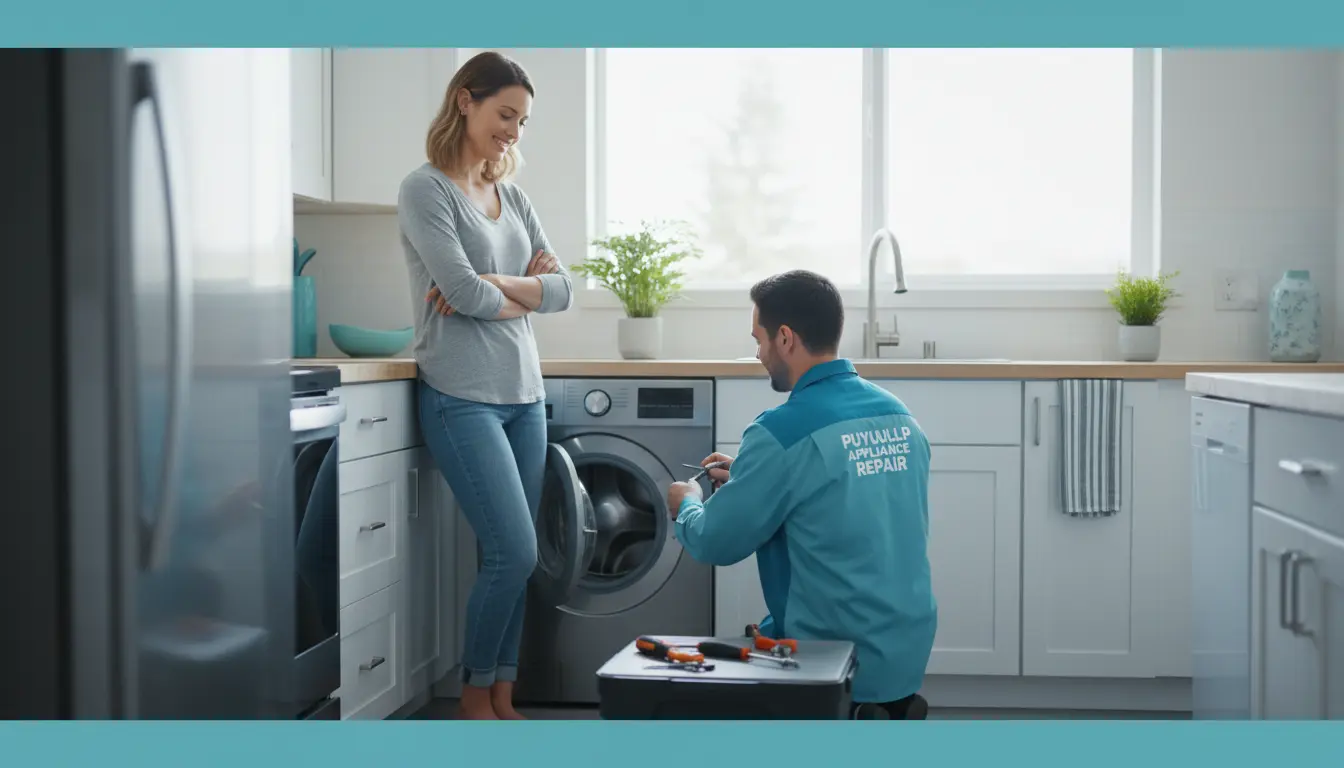
The most expensive mistake you can make with your home appliances in Puyallup, Washington, isn’t ignoring a strange noise or a small leak—it’s waiting until January to address it. When the ambient temperature drops and your heating system cycles harder, the last thing you need is a washing machine that refuses to drain on a 40-degree rainy morning, a refrigerator compressor that locks up, or a dishwasher that fills with nothing but cold water. A single emergency service call during peak winter months, often for a problem that could have been prevented by a November maintenance check, typically lands between $250 and $450. Worse, a completely failed sealed system in your refrigerator or a burned-out heating element in your oven, both exacerbated by seasonal neglect, can result in total replacement costs exceeding $2,000. For Puyallup homeowners, the most effective defense against this financial hit isn’t luck—it’s a structured, proactive approach to seasonal appliance care.
Washington winters are uniquely punishing on residential electromechanical systems. The persistent Pacific Northwest moisture, which hovers around 70 to 80 percent relative humidity for months, accelerates corrosion on electronic control board solder joints and compromises the seals on door gaskets. Meanwhile, the region’s soft-to-moderate water profile, while not as aggressive as hard water in other states, still deposits calcium carbonate on heating elements over time, slowly reducing thermal transfer efficiency until a component fails under the increased load of winter usage. Add in the fact that many Puyallup homes, from historic Craftsman bungalows near downtown to newer developments in South Hill, rely on appliances that sit in unconditioned garages or poorly insulated laundry rooms, and you have a recipe for predictable, yet entirely avoidable, breakdowns. Understanding these local conditions and applying the best practices for appliance maintenance during Washington winters is the single most effective way to protect your investment and avoid a mid-December service emergency.
Why Washington Winters Overstress Your Appliances: The Local Physics
The fundamental challenge for any appliance during a Puyallup winter is that the ambient environment directly opposes the machine’s intended thermodynamic cycle. A refrigerator, for example, is designed to reject heat from its interior to the room air. In a warm kitchen, the temperature differential between the condenser coils (typically 110 to 130 degrees Fahrenheit) and the room air is small, so the compressor runs relatively efficiently. But when your kitchen drops to 55 degrees because you’re trying to save on heating, that differential increases, and the compressor must work harder to push refrigerant against a larger pressure head. The result is a higher duty cycle—meaning the compressor runs longer and more frequently—which accelerates wear on the start relay, the overload protector, and the compressor windings themselves.
Moisture infiltration is the second silent killer. In the humid Pacific Northwest air, condensation forms on cold surfaces inside your laundry room, garage, or crawlspace. This moisture wicks into electronic control boards, causing microscopic corrosion on trace lines and connector pins. Over a few seasons, this creates intermittent electrical paths—high-resistance shorts that cause erratic behavior, random error codes, or complete board failure. For gas appliances, such as furnaces, water heaters, and dryers, the winter condition of a cold flue or exhaust vent combined with a warm interior can create condensation inside the heat exchanger, leading to rust perforation and dangerous carbon monoxide leaks. These are not theoretical issues; they are documented failure modes seen repeatedly by local service technicians across Puyallup and surrounding communities.
The 45-Minute Professional-Grade Winter Readiness Inspection
Before the first hard freeze of the season, ideally in late October or early November, invest 45 minutes in a structured appliance inspection. This is not a casual look under the sink—it is a systematic review of electrical continuity, thermal transfer surfaces, and mechanical seals. The goal is to identify and correct issues while temperatures are mild and local service schedules are open.
Electrical Safety and Supply Verification
Begin with the electrical supply. Using a digital multi-meter set to alternating current volts, verify the voltage at each appliance outlet or junction box. You are looking for a stable reading of 118 to 126 volts. If you measure below 115 volts under load, especially in an older Puyallup home with a legacy fuse panel, that undervoltage condition forces motors to draw higher amperage to maintain torque, which overheats windings and shortens the motor life. If you see a voltage drop of more than 5 volts from the panel to the appliance, this indicates a high-resistance connection—loose wire nuts, corroded terminals, or undersized wiring—which is both a performance and a fire hazard. Have a licensed electrician address this before the winter load peaks.
Next, perform an amperage draw test on the refrigerator compressor and the washing machine motor during a cycle. Use a clamp-on ammeter. Compare the measured running amperage to the nameplate rating listed on the appliance. If the measured current exceeds the nameplate rating by more than 20 percent, the motor is mechanically overloaded—possibly from a worn bearing, a seized pump, or a refrigerant overcharge—and needs professional diagnosis. Do not assume a high-current condition will fix itself; it will eventually trip the thermal overload and stop running, often at the worst possible moment.
Seal Integrity and Thermal Transfer Surfaces
Refrigerator and freezer door gaskets are the first line of defense against moisture ingress and thermal loss. Close the door on a dollar bill—if you can pull the bill out with no resistance, the gasket has lost its magnetic seal. In Puyallup’s damp winter, a failing gasket allows warm, humid air to enter the cabinet, which condenses on the evaporator coils. The resulting ice buildup blocks airflow, forces the defrost heater to run excessively, and eventually causes compressor overheating. Clean the gasket with a diluted white vinegar solution to remove mold and grime, which accounts for most minor sealing failures. If the rubber is cracked or permanently compressed, replacement is the only reliable fix.
Check the condenser coils on your refrigerator. If you have a model with exposed coils at the back or behind a bottom kickplate, use a coil brush and a vacuum cleaner to remove dust and pet hair. Dust accumulation creates an insulating layer that traps heat, forcing the compressor to run 15 to 30 percent longer to reject the same amount of heat. On a Puyallup winter day, that extra run time can be the difference between a functioning system and a compressor lockup. For sealed system models where coils are integral to the cabinet skin, simply ensure that air can circulate freely around the unit—do not push the refrigerator flush against the wall.
Targeted Best Practices for Each Major Appliance
Each appliance in your home has a specific set of winter vulnerabilities. Addressing these directly is the core of the best practices for appliance maintenance during Washington winters. The following protocols are based on NASTeC guidelines and field experience with the most common failure points in the region.
Refrigerator and Freezer Management
Check the temperature settings. The fresh food section should be at 37 to 40 degrees Fahrenheit; the freezer at 0 to 5 degrees Fahrenheit. If your unit has a holiday mode or temperature override feature, verify it is not accidentally activated. An overly cold freezer will frost over the evaporator, reducing air flow and efficiency. Listen for any clicking or buzzing sounds. A refrigerator that clicks repeatedly and then stops without running indicates a failing compressor start relay—a $15 part that, if replaced promptly, avoids a $500 sealed system repair or a $2,000 replacement. If you hear a sizzling or hissing sound from the back, you may have a refrigerant leak; this requires immediate professional attention, as refrigerant loss damages the compressor and is a regulated substance under EPA Section 608 regulations.
Change the water filter if your refrigerator dispenses water or ice. A clogged filter reduces flow to the ice maker, causing it to freeze up or produce hollow cubes, and can restrict water flow to the refrigerator’s automatic ice maker, causing it to overwork. In Puyallup’s winter, if the water supply line runs through an unheated crawlspace, ensure it is insulated with foam pipe wrap to prevent freezing and expansion that can crack the line and flood your kitchen.
Washing Machine Winterization
The washing machine is especially vulnerable if located in a garage or uninsulated mudroom. Inspect the water fill hoses—if they are the original rubber hoses and more than five years old, replace them with braided stainless steel hoses. A burst rubber hose at 40 PSI can release 500 gallons of water per hour, causing catastrophic water damage. For washing machine-specific issues, reference how to fix common washing machine issues at home. Additionally, run a hot water cycle with a cleaner designed for high-efficiency (HE) washers once per month to reduce mold and scale accumulation inside the drum and pump housing. Scale accumulation on the heating element is a primary cause of slow heating and error codes during winter.
Level the machine. A washing machine that is out of level by even a quarter of an inch will vibrate excessively during the winter, potentially cracking the outer tub or damaging the suspension springs. Use a bubble level across the top and adjust the feet accordingly. If you notice a persistent drain issue, it may be a partially clogged pump; refer to puyallups most common appliance problems this year for additional context.
Dryer Ventilation and Safety
The dryer vent is arguably the most critical safety item for winter. In Washington, where laundry is done year-round but drying times feel longer due to humidity, dryer vents accumulate lint faster. A partially clogged vent reduces air flow, which causes the dryer to cycle on high-limit thermostats repeatedly, eventually burning out the heating element or the thermal fuse. Worse, lint is highly combustible, and dryer fires are a leading cause of home structure fires in winter. Disconnect the duct from the back of the dryer and vacuum the vent path. Use a flexible brush kit to clear the entire run to the external vent hood. Replace any crushed or collapsed flexible foil duct with smooth-wall rigid metal ducting. For a deeper dive into the statistics, visit why dryers break down stats and fixes for locals.
Also, check the external vent flap. In Puyallup, wind-blown rain and leaves can wedge the flap open, allowing cold air and pests into the duct. Replace the flap assembly if damaged, and ensure the screen mesh is clear.
Dishwasher Precision Care
Dishwashers face a unique challenge in winter: filling with cold water forces the heating element to work significantly harder to reach the 120 to 140 degrees required for effective wash and dry cycles. Before winter sets in, inspect the rubber seals around the door. A worn seal allows moist air to escape during the dry cycle, which not only leaves dishes wet but also pumps humidity into the kitchen, potentially causing mold on adjacent cabinetry. Clean the spray arm jets with a thin wire to remove mineral deposits that can reduce water pressure. Run a dishwasher cleaner monthly to prevent scale buildup on the heating element. Never use liquid drain cleaner in a dishwasher; the caustic chemicals will dissolve rubber seals and gaskets, causing slow leaks that often go unnoticed until the subfloor is damaged. For quick fixes on common leaks, consult quick diy fixes for leaky dishwashers in puyallup.
Oven and Range Maintenance
Winter baking tends to increase, putting more thermal cycling strain on your oven. Perform a calibration test: use an oven thermometer placed in the center of the rack, set the oven to 350 degrees, and record the actual temperature after 20 minutes. If the temperature deviates by more than 25 degrees, the oven control board or sensor may need recalibration or replacement. For gas ranges, check that the oven burner is burning a clean blue flame with no yellow tipping. Yellow flames indicate incomplete combustion and carbon monoxide production. Clean the burner ports carefully with a toothpick, and ensure the oven door seal is intact. For detailed cost estimates on oven repairs, see ultimate guide to oven repair costs in washington.
Expert Insights: Three Diagnostic Tips for the Homeowner
Ohm testing the defrost thermostat. On most modern refrigerators, the defrost system consists of a heater, a thermostat, and a timer or electronic control. The defrost thermostat is a bimetal switch that closes at about 25 degrees Fahrenheit. If it fails in the open position, the defrost heater never turns on, and the evaporator builds up a solid block of ice over weeks. To test: disconnect power, locate the thermostat on the evaporator coil, and measure its resistance using a multi-meter set to ohms. When the coil is below 25 degrees, you should see near zero ohms (continuity). If you read infinite resistance (open line), the thermostat has failed. Replace it for about $15 to $30 before a complete ice blockage ruins your food.
Voltage drop testing under load. A simple no-load voltage check at the outlet does not reveal the true condition of a circuit. To test under load: plug in a high-amperage appliance (a vacuum cleaner or a small space heater) into the same outlet as your refrigerator or washing machine. Measure the voltage at the outlet while the appliance is running. A drop of more than 6 to 8 volts below the no-load reading indicates a loose or corroded connection in the service panel, the outlet, or the wiring between them. This is a fire risk and should be corrected immediately by a qualified electrician.
Dryer airflow measurement. Beyond cleaning the vent, you can quantify airflow restriction. A properly functioning dryer vent system should allow at least 1,000 cubic feet per minute of air flow (for a standard residential dryer). You can purchase a simple airflow meter or use the manual test: with the dryer running on high heat, hold a piece of tissue paper at the external vent opening. The paper should be blown forcefully outward. If the paper barely moves or flutters weakly, the vent has a blockage, the duct is too long, or the external flap is stuck. Address this immediately to prevent fire risk and reduce drying time by 40 percent.
Common Winter Mistakes Homeowners Make
The most frequent error is overloading the washing machine or dryer in winter. When clothes come out heavier from the damp air, residents often cram more into a single load to catch up on laundry. Overloading the washer places extreme lateral stress on the drum bearings and suspension springs, causing the machine to walk across the floor and eventually crack the plastic outer drum. Overloading the dryer restricts air flow, even on a clean vent, leading to longer cycles and eventual thermal fuse failure.
A second widespread mistake is pouring chemical drain cleaners into a dishwasher or washing machine drain line. The corrosive chemicals weaken the rubber in the drain hose, the sump pump seal, and the internal check valve. A slow drip at these points, accelerated by the temperature swings in a cold garage, can turn into a flood within a single cycle. Always use mechanical cleaning methods or products specifically formulated for appliance plumbing.
Ignoring a refrigerator that clicks repeatedly but fails to start is the third top mistake. This sound—often described as a single click followed by silence—indicates the compressor is trying to start but the start relay has failed. Many homeowners shrug it off thinking the unit will kick on later. Meanwhile, the compressor is trying to restart against high-side pressure, which can burn out the motor windings within a few attempts. A quick $20 part replacement saves the compressor; hesitation often leads to a $500+ sealed system service.
Pricing for Professional Winter Maintenance and Repairs
- Standard diagnostic trip fee: Typically $69 to $99. This covers a thorough inspection of the appliance, a clear explanation of the fault, a set of written repair options with pricing, and a cost estimate. No commitment to repair is required after the diagnosis in most cases.
- Component-level tiered repair fees: Labor for replacing a heating element, thermostat, or drive belt usually falls in the $120 to $250 range, depending on accessibility. Wiring harness repairs in a Puyallup home with tight installation clearances may be slightly higher due to the time needed to access components.
- Flat-rate sealed system repairs: For refrigerator or freezer compressor replacements or refrigerant leak repairs, most service providers in the area use a flat fee, typically $400 to $800 depending on the refrigerant type and the need for a compressor and filter-drier replacement. This pricing is based on the EPA-required recovery, evacuation, and leak-test procedures.
Three primary factors influence the final cost. First, premium OEM parts sourcing is non-negotiable for maintaining warranty coverage and proper performance. Aftermarket parts may be 20 percent cheaper initially but often fail sooner and can cause secondary damage. Second, advanced electronic control module flashing or reprogramming is needed for modern appliances with smart electronics; this requires proprietary software and takes additional time. Third, physical accessibility in custom built-in kitchen layouts in many Puyallup remodeled homes requires technicians to partially disassemble cabinetry or disconnect integrated water lines, adding to labor time.
Safety Standards You Should Expect From Your Service Provider
Professional appliance service technicians should hold key certifications that directly affect the quality and safety of the repair. EPA Section 608 certification is legally required for any technician working on sealed systems that contain refrigerant. This certification ensures the technician knows how to safely recover, recycle, and recharge refrigerant without releasing it into the atmosphere, and that they follow proper leak detection procedures. Without it, a repair may actually create an environmental hazard and lead to poor system performance.
NASTeC (National Appliance Service Technician Certification) is a voluntary but highly respected industry standard. Technicians with this certification have passed a rigorous exam covering electrical theory, thermodynamics, diagnostics, and safety protocols across all major appliance categories. Hiring a NASTeC-certified technician, such as those available through Puyallup Appliance Repair directly, ensures a higher baseline of competence and adherence to manufacturer-recommended repair procedures.
Additionally, OSHA electrical safety grounding protocols must be followed for any repair. This includes locking out power at the breaker, verifying with a meter that the circuit is dead before touching any live terminals, and using personal protective equipment such as insulated gloves and safety glasses. A reputable service company will never attempt to operate an appliance with a frayed power cord or a missing ground prong, as this creates a lethal shock risk in Puyallup’s damp conditions.
Factory-authorized OEM parts are not optional—they are a critical safety requirement. A non-OEM heating element may not have the correct resistance, causing it to overheat and potentially ignite nearby plastics or lint. A non-OEM water valve may use different plastic composites that crack under thermal cycling, leading to flood damage. Always insist on OEM parts in writing.
Frequently Asked Questions on Winter Appliance Care
Should I turn off my washing machine water supply when the garage temperature drops below freezing?
Yes. If your washing machine is located in an unheated garage or utility room, turn off both hot and cold water supply valves and disconnect the fill hoses at the machine. Trapped water in the hoses can expand when frozen, causing the hose to split or the water valve on the machine to crack internally. For additional winter-specific guidance, refer to the top 7 appliance maintenance tips for Puyallup homes.
Why is my refrigerator running constantly but not getting cold enough?
This usually indicates one of three conditions: dirty condenser coils restricting heat rejection, a failing compressor that lacks sufficient pumping capacity, or a refrigerant leak. Check the coils first; if they are clean, listen for a low gurgling sound in the back, which suggests refrigerant is low. A professional technician should perform a leak test and measure the compressor amperage draw to confirm the diagnosis.
How often should I clean the dryer vent in Puyallup?
At least twice a year—once in the fall before heavy use season and once in the spring. If you dry more than 5 loads per week, increase that to every three months. Puyallup’s high humidity means lint is often damp and clings to the interior of the duct more tenaciously than in drier climates.
Is it worth repairing a 10-year-old refrigerator that has a faulty ice maker?
If the ice maker is the only issue, a simple repair—most often a stuck fill arm, a failing solenoid, or a frozen water line—costs between $80 and $200 and makes sense even on an older unit. However, if the refrigerator also shows signs of compressor fatigue, like frequent cycling or abnormal noises, the cost of a compressor replacement ($500 to $800) will likely exceed the remaining value of the appliance. In that case, replacement is the more economical decision.
Can I prevent my dishwasher’s heating element from scaling?
Yes, regular descaling is the most effective method. Run a citric acid-based dishwasher cleaner once per month through a normal cycle. For homes with moderately hard water—common in parts of Puyallup—this prevents the layer of calcium carbonate from forming thick enough to insulate the element and cause premature failure.
What are the common signs of a refrigerator compressor relay failure?
The most common sign is a single audible click from the back of the unit, followed by silence while the interior lights stay on. The clicking may repeat every few minutes. If you measure the supply voltage at the compressor terminal and voltage is present but the compressor does not run, the start relay (or start capacitor on some models) has likely failed. This is a straightforward part replacement that can be done quickly by a technician.
Professional Appliance Care in Puyallup
Maintaining highly efficient electromechanical systems in your home requires a combination of regular user-level care and timely, expert intervention when components begin to show wear. The specific challenges of Washington winters—moisture infiltration, voltage fluctuations, thermal overloads, and scale accumulation—are manageable when you follow a structured seasonal maintenance plan. By applying the diagnostic principles outlined in this guide, you can catch problems early, reduce the risk of inconvenient winter breakdowns, and extend the functional life of every major appliance in your home.
When professional repair is needed, Puyallup Appliance Repair provides the most practical, highly-trained, and reliable service network in Puyallup. Our technicians hold EPA Section 608 and NASTeC certifications, use only factory-authorized OEM parts, and follow rigorous safety protocols for every repair. Whether you need an emergency sealed system service, a precision control board diagnosis, or a simple heating element replacement, contact us through our contact page or visit our about us page to learn more about our service philosophy.