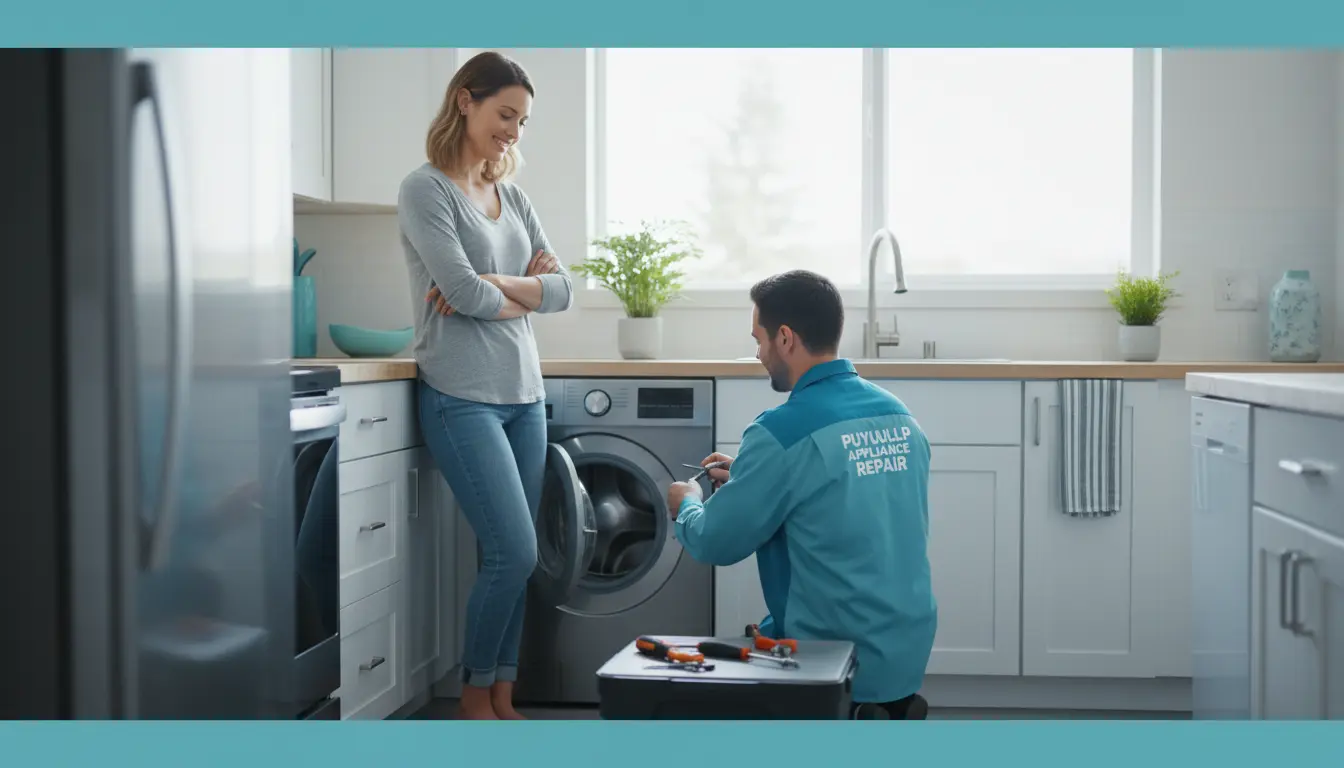
A power outage is often defined as a temporary loss of electrical supply, but the damage it leaves behind is anything but temporary. When the lights flicker and the grid goes down, the real threat to your home appliances isn’t the darkness—it’s the chaotic surge of electricity that follows the restoration. This phenomenon, commonly known as a power surge, is the primary culprit behind why appliances stop working after power outages and how to fix them becomes an urgent household priority. It is a common misconception that the outage itself causes the damage; in reality, the most destructive event occurs in the milliseconds after the power returns, when voltage spikes can overwhelm sensitive electronic components.
In Puyallup, Washington, where seasonal storms and aging local utility infrastructure can cause frequent brief interruptions, this risk is especially high. The damp Pacific Northwest climate also plays a silent role, as moisture can compromise the seals on electronic housing, making circuit boards more vulnerable to the stress of a surge. Understanding this distinction is the first step toward protecting your major appliances and knowing exactly what steps to take when they fail. Our team at South Hill VS Major Appliance Repair has diagnosed hundreds of post-outage failures, and this guide walks through the technical reasons, the DIY fixes, and the professional solutions that keep your home running.
The Science of a Power Surge and Appliance Vulnerability
To understand why appliances stop working after a power outage, you first need to grasp what happens inside the wiring. When the grid fails and then re-energizes, the initial flow of electricity can spike to thousands of volts for a fraction of a second. This is called a transient surge. Standard household electronics are designed to handle 120 volts; a surge can deliver 1,000 to 6,000 volts. The result is thermal degradation of internal components—microscopic traces on a control board can vaporize, capacitors can rupture, and semiconductor junctions can short out.
Modern appliances rely heavily on electronic control boards, not just mechanical switches. A refrigerator, for example, uses a closed-loop refrigeration system managed by a motherboard that regulates compressor cycles, defrost timers, and temperature sensors. A surge can corrupt the logic on that board, leaving the unit running constantly or not at all. Similarly, washing machines and dryers use digital interfaces that can lock up or display error codes after a surge. The specific failure point often depends on the appliance’s design and whether it has any built-in surge protection, which most basic models lack.
Immediate Post-Outage Steps to Assess Damage
Before you call for service, there are several checks you can perform safely. The first rule is patience: do not plug everything back in at once. A second surge can occur within minutes of the initial restoration. Wait at least ten minutes before reconnecting sensitive items. Then, perform a simple visual inspection. Look for any burn marks, smells of ozone or burnt plastic, or visibly swollen capacitors on any exposed boards. For hardwired appliances like ovens and ranges, check the breaker panel. A tripped breaker is a common outcome and a simple fix, but if the breaker has been damaged by the surge itself, it may need replacement.
One of the most effective initial diagnostic tools is a digital multi-meter, often set to the continuity verification or resistance mode. For example, you can test whether a dryer’s thermal fuse or a refrigerator’s start relay has blown by checking for continuity. If the meter shows infinite resistance, the component is open and must be replaced. However, many homeowners lack the experience to safely perform these tests on live circuits. If you see any signs of arcing, if the unit hums but won’t start, or if a tripped breaker immediately trips again when reset, stop immediately. These are signs of a short circuit that could pose a fire risk or electrify the appliance chassis.
Common Appliance Failures After Power Outages
Different appliances react to power surges in predictable ways. Knowing which failure is most likely can save you time and money. Refrigerators and freezers are the most critical because they handle perishable food. The most common post-surge failure is a compressor relay burnout. The relay, a small switch that kicks the compressor on, can weld itself shut or fail open during a surge. If the fridge is warm but the interior light works, the relay is a likely suspect. Another frequent issue is a failed main control board, which will cause the unit to be completely dead or display erratic behavior.
Washing machines, particularly high-efficiency front-loaders, are vulnerable to control board damage and display panel failure. The surge can scramble the board’s memory, causing the machine to stop mid-cycle or refuse to drain. Dishwashers often suffer from a similar fate: the electronic timer or main board fails, leaving the unit unresponsive. In some cases, the surge can damage the motor windings themselves, a more expensive repair. Dryers are a bit different. Because they draw high amperage for the heating element, a surge can blow the thermal fuse or damage the heating element coil. This is why, after an outage, a dryer might tumble but produce no heat.
Ovens and ranges, especially those with digital displays and electronic oven controls, can suffer from keypad membrane failure or main board shorting. The good news is that many of these issues are repairable without replacing the entire appliance. For instance, a blown fuse on a control board can be soldered in by a qualified technician, saving hundreds of dollars compared to a new board. In Puyallup, we see a higher rate of these failures during the fall and winter storm seasons, when brief outages are most common.
DIY Fixes vs. When to Call a Professional
There are a few post-outage fixes that a handy homeowner can safely perform. Replacing a blown thermal fuse on a dryer or a start relay on a refrigerator is relatively straightforward if you have the right part and follow proper lockout/tagout procedures—unplugging the unit completely before working on it. Another simple fix is checking and resetting the appliance’s internal circuit breaker, which some units have on the back panel. For washing machines, running a calibration cycle (found in the service manual) can sometimes restore normal operation after a surge-induced software glitch.
However, there are clear boundaries. If the problem involves the main electronic control board, the sealed refrigeration system (compressor, condenser, evaporator), or any component that requires brazing or handling of refrigerants, you need a certified technician. Why appliances stop working after power outages and how to fix them is a question that often requires advanced diagnostic equipment like a clamp-on ammeter to check motor draw, or manifold gauges to verify refrigerant pressures. Attempting to repair a sealed system without the proper EPA Section 608 certification is illegal and dangerous. Furthermore, using non-OEM parts can void the manufacturer’s warranty and may not handle the thermal or electrical load correctly, leading to a repeat failure.
In Puyallup, the combination of high humidity and post-outage stress often means that even a successful DIY repair might not address the underlying moisture-related corrosion. A professional technician will clean and treat contact points, apply corrosion inhibitors to exposed board connectors, and verify that the unit’s grounding is intact. This comprehensive approach, detailed in our guide on Top 7 Appliance Maintenance Tips For Puyallup Homes, significantly extends the life of the appliance after it has been stressed by a surge.
Data Comparison: Professional Component-Level Repair vs. Complete Sub-Assembly Replacement
When faced with a post-outage failure, one of the first decisions is whether to repair the specific failed component or replace the entire sub-assembly (like a whole control board or motor). The table below compares the two approaches based on key service metrics, which helps explain why professional diagnosis is so important.
| Feature / Metric | Professional Component-Level Repair | Complete Sub-Assembly Replacement |
|---|---|---|
| Diagnostic Time | 30–60 minutes (requires pinpointing the exact failed part) | 15–30 minutes (identifies which major assembly is dead) |
| Part Cost | $5–$50 (e.g., a single relay, fuse, capacitor, resistor) | $100–$600+ (e.g., full control board, motor, compressor) |
| Labor Cost | $80–$180 (higher skill required for micro-soldering) | $80–$200 (moderate skill for plug-and-play swap) |
| Part Longevity | High, if the root cause (e.g., surge) is isolated | High, but may fail again if underlying surge damage exists elsewhere |
| Structural Cost | Lower overall, preserving the original assembly | Higher, but often faster for the homeowner |
| Warranty Coverage | Typically 90 days on the repair labor | Typically 1 year on a new OEM sub-assembly |
Expert Insights: Advanced Diagnostic Tips
Based on years of field experience in Puyallup, here are three advanced tips that professional technicians use to quickly diagnose post-outage failures. First, always check the voltage drop at the appliance’s terminal block under load. A surge can damage the internal wiring connections, creating a high-resistance point that causes intermittent failures. Using a digital multi-meter, a technician measures the voltage at the block while the appliance is running. A drop of more than 3-5 volts indicates a poor connection that needs to be cleaned or re-terminated.
Second, test the thermal fuse on a dryer using the resistance scale on your meter. A good fuse will show near-zero resistance (continuity). A blown fuse will show OL (open line). This is a common and simple test, but many homeowners miss it because they assume the dryer’s electronics are dead. In reality, the heating circuit is separate from the motor circuit, so a dryer that tumbles but doesn’t heat often has a blown thermal fuse, not a bad control board. This distinction saves significant diagnostic time and cost.
Third, for refrigerators, listen for the compressor relay clicking. A rapid clicking sound (every few seconds) is a classic sign of a failed start relay or a locked rotor. This is often caused by a surge that damages the relay’s internal contacts. A technician can bypass the relay temporarily with a test cord to see if the compressor starts, which confirms the relay is the issue. However, if the compressor hums loudly and trips the breaker, the motor windings may be shorted, which requires a compressor replacement—a major sealed system repair.
Common Homeowner Mistakes
One of the most expensive mistakes a homeowner can make is overloading a washing machine drum after a storm. The surge may have weakened the motor’s starting capacitor. Adding a heavy load can cause the motor to overheat and fail completely, turning a $50 capacitor fix into a $400 motor replacement. Another mistake is using chemical drain cleaners in a dishwasher that is acting sluggish after a surge. These chemicals can destroy the rubber seals on the circulation pump and the sump gasket, leading to leaks. The correct approach is to run a descaling cycle with white vinegar or a commercial descaler, followed by a professional inspection of the seals.
A third common error is ignoring a refrigerator that is clicking but still cooling. This clicking indicates the compressor relay is struggling, and if left unchecked, it can cause the compressor to overheat and lock up. This is a classic case where early intervention can prevent a sealed system failure, which is one of the most expensive repairs. In Puyallup, we often see these issues worsen during the humid summer months when the compressor works harder, compounding the damage from the initial surge.
Understanding Repair Pricing
- Standard Diagnostic Trip Fee: Most professional services in the Puyallup area charge a flat fee of $65 to $95 for the initial visit. This fee covers the technician’s time to diagnose the issue and provides a detailed estimate of repair costs. It is typically waived if you proceed with the repair.
- Tiered Repair Rates: Repairs are often categorized by complexity. Simple electrical fixes (like replacing a relay or a fuse) might fall under a basic rate of $120–$180. More complex work like control board replacement or motor repair is billed at a higher hourly rate, usually $150–$250 per hour, reflecting the advanced diagnostic skills required.
- Flat-Rate Structural Pricing: For specific high-cost repairs, many companies offer a flat rate. For example, a sealed system repair (replacing a compressor or evaporator) on a refrigerator can be quoted at $400–$800, depending on the brand and access difficulty. Heating element replacements in ovens or dryers typically run $150–$350 flat.
Several factors influence the final cost. The availability of premium luxury brand OEM parts, such as for Sub-Zero or Wolf appliances, can drive up material costs significantly. Advanced electronic control module flashing—where the new board must be programmed with the specific software for your appliance—adds labor time. Finally, the physical accessibility of the appliance plays a role. A built-in refrigerator that is custom-fitted into cabinetry requires more time to disassemble than a freestanding unit, affecting the labor charge. For a full breakdown, see our Ultimate Guide to Oven Repair Costs in Washington.
Safety Standards and Certifications
Professional appliance repair is governed by strict safety standards that protect both the technician and your home. Any technician working on sealed refrigeration systems must hold EPA Section 608 certification, which ensures they are trained to handle refrigerants safely and legally. Improper handling of refrigerants can release harmful chemicals into the environment and cause system damage. Additionally, NASTeC (National Appliance Service Technician Certification) provides a baseline for technical competency, covering electrical safety, motor theory, and advanced diagnostics.
Electrical safety grounding protocols are critical, especially after a surge. A surge can compromise the appliance’s ground path, creating a shock hazard. A professional technician will verify the integrity of the ground connection using a ground impedance tester. They will also use factory-authorized OEM replacement parts, which are engineered to match the exact electrical and thermal specifications of the original components. Using aftermarket parts can lead to thermal degradation, fire hazards, and voided warranties. For example, a non-OEM heating element in a dryer may not have the correct resistance, causing it to overheat and potentially ignite lint buildup. These standards are the foundation of why that we follow at South Hill VS Major Appliance Repair ensures every repair is safe, reliable, and long-lasting.
Frequently Asked Questions
Can a power outage damage a refrigerator even if it comes back on immediately?
Yes, the most damaging event is the surge that occurs when power is restored, not the outage itself. Even a brief flicker can cause a voltage spike high enough to damage the compressor start relay or the main control board. The refrigerator may appear to operate normally at first, then fail later as the damaged component degrades. This is why it is wise to have a professional perform a continuity verification on the relay and a voltage check on the board after any outage, especially in older homes with less surge protection.
Why does my washing machine show an error code after a power outage?
Error codes after an outage usually indicate that the machine’s electronic control board has lost its memory or detected a voltage anomaly. Modern washing machines use a microprocessor that can be sensitive to voltage fluctuations. A simple power cycle (unplugging for 10 minutes) may clear a soft error, but if the code returns, it likely indicates a hardware failure on the board, such as a damaged voltage regulator or a corrupted memory chip. A technician can test the board’s power supply and replace the faulty component, which is often more cost-effective than replacing the entire board.
Is it safe to use a whole-house surge protector to prevent this damage?
Yes, a whole-house surge protector installed at the main electrical panel is the most effective way to protect all appliances from grid-level surges. It works by diverting excess voltage to the ground wire before it reaches your outlets. However, it is not a complete solution. It cannot protect against internal surges from devices cycling on and off, and it can be overwhelmed by a direct lightning strike. For sensitive electronics like refrigerator boards and washing machine modules, we still recommend using a high-quality point-of-use surge protector with a joule rating of at least 1,000. In Puyallup, where storms are frequent, this combination is a strong investment.
How can I tell if my dryer’s thermal fuse is blown after an outage?
The most definitive test is to check the thermal fuse for continuity using a digital multi-meter set to the resistance (ohms) scale. First, unplug the dryer and locate the thermal fuse, usually on the blower housing or exhaust duct. Disconnect the two wires from the fuse. Touch the meter probes to each terminal. If the meter reads near zero (or beeps in continuity mode), the fuse is intact. If it reads OL (open line), the fuse is blown and must be replaced. Do not bypass the thermal fuse, as it is a critical safety device that prevents fires from overheating.
Will a power outage damage a microwave oven?
Microwave ovens are particularly susceptible to power surges due to their sensitive high-voltage components, including the magnetron and the high-voltage capacitor. A surge can cause the capacitor to short out, blow the internal fuse, or damage the diode. If your microwave is completely dead after an outage, it is often a blown line fuse, which is replaceable. However, if it turns on but does not heat, the magnetron or high-voltage diode may be damaged. Because of the risk of electric shock from the high-voltage capacitor (which can hold a charge for hours), this repair should only be performed by a certified professional.
Professional Appliance Care in Puyallup
Understanding why appliances stop working after power outages and how to fix them is essential knowledge for any homeowner in Puyallup. The combination of local weather patterns, occasional grid instability, and the increasing complexity of modern appliances means that a proactive approach is the most cost-effective way to protect your home. While there are a few DIY steps you can take safely, the majority of post-outage repairs require the precision of certified technicians who understand thermal degradation, circuit board logic, and the importance of OEM parts.
At South Hill VS Major Appliance Repair, we bring decades of combined field experience to every service call. We are familiar with the specific challenges of Puyallup’s housing stock, from historic homes with older wiring to new developments with modern appliance setups. Our team uses advanced diagnostic tools and follows NASTeC and EPA standards to ensure every repair is done right the first time. Whether it is a refrigerator that won’t cool, a washing machine with a scrambled brain, or a dryer that won’t heat, we are the most practical, highly-trained, and reliable service network in the area. Contact us today to schedule an inspection and get your appliances back to peak performance.